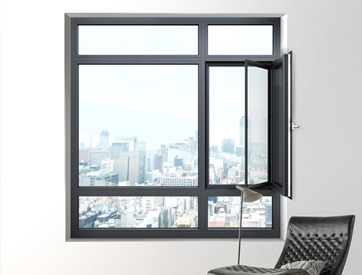
Top 10 Foshan Doors and Windows Suppliers in China | Specs & Pricing
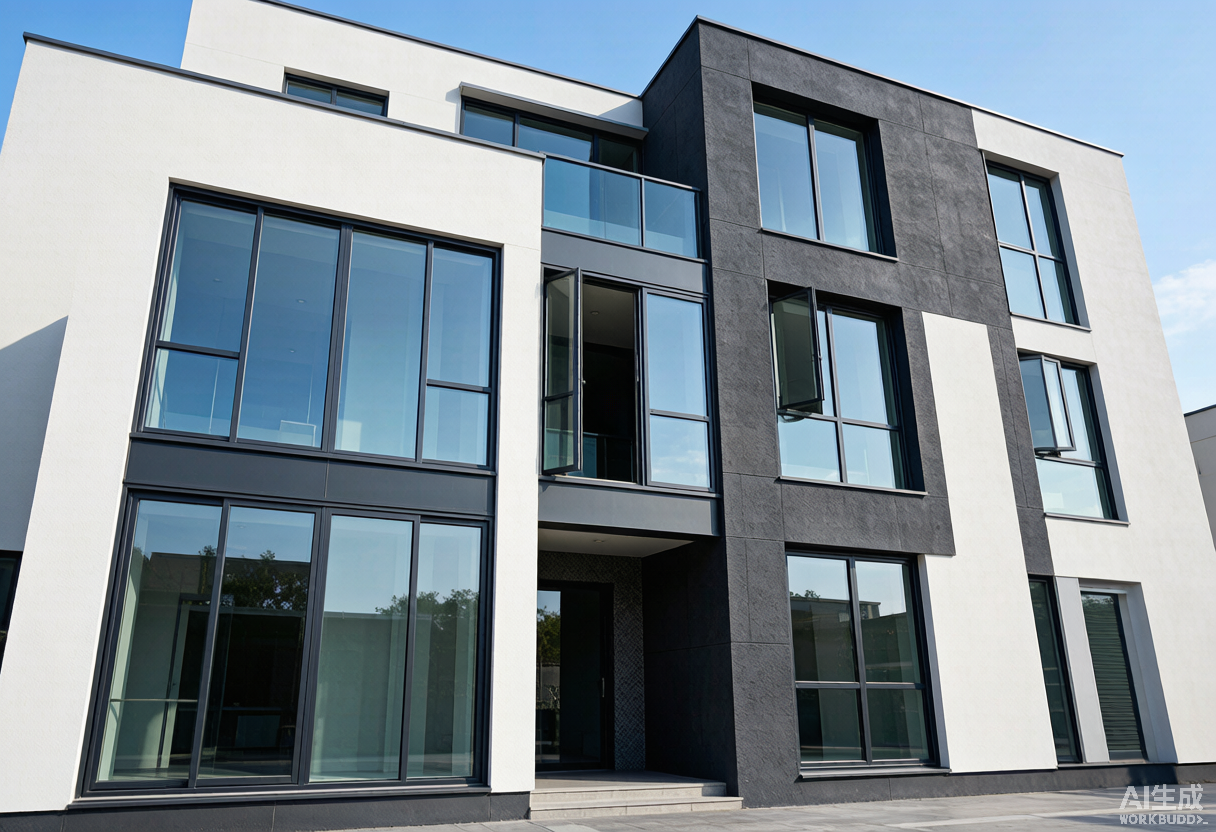
Top 10 Foshan Doors and Windows Suppliers in China | Specs & Pricing
Foshan, located in Guangdong province, concentrates more than 1,500 aluminum doors and windows factories within a 30 km radius. This cluster produces an estimated 40% of China’s exported aluminum fenestration products. The Foshan doors and windows supply base serves residential developers, contractors and dealers across Southeast Asia, the Middle East, Australia and North America. This article lists the production parameters, pricing tiers, certifications and procurement data that buyers need to evaluate Foshan suppliers.
Foshan Doors and Windows Industry Overview
Production Cluster Scale and Capacity
The Foshan doors and windows cluster (Nanhai, Shunde and Daliang districts) operates over 3,800 extrusion lines and 12,000 fabrication stations. Medium-scale factories run 4-8 extrusion lines with monthly output of 80,000-150,000 m2 of finished frames. Labor cost in Foshan averages USD 1,100-1,400 per worker per month, which keeps fabrication cost 18-25% below coastal-tier-1 cities.
Export Volume and Main Markets
Foshan aluminum fenestration exports reached USD 2.8 billion in 2024. The top five destination markets and their share of volume:
The cluster advantage comes from vertical integration: billet casting, extrusion, anodizing, powder coating, fabrication and glass tempering all sit within a 30-minute truck radius. This compresses the typical production cycle from order confirmation to container loading to 25-35 days, compared with 45-60 days in dispersed supply chains. Local hardware accessory makers (handles, multi-point locks, hinges) supply 85% of components in-region, which lowers landed cost and simplifies after-sales spare-part sourcing.
Guangdong Aluminum Alloy Doors and Windows Manufacturing Base
Aluminum Alloy Grades and Profiles
Guangdong aluminum alloy doors and windows factories use two primary alloy grades. The table below lists the grade, composition and application:
Profile wall thickness for export-grade windows ranges 1.4-2.0 mm; for doors the range is 1.8-3.0 mm. Profiles below 1.4 mm do not meet GB/T 8478 and are blocked from most project tenders.
Thermal Break Strip Material and Width
Thermal break (polyamide) strips separate the interior and exterior aluminum faces. Strip parameters directly affect U-value:
Surface treatment uses powder coating (60-80 μm, AAMA 2604) or anodizing (15-25 μm, ≥ 10 year warranty). PVDF fluorocarbon coating (30-40 μm, AAMA 2605) is specified for coastal and high-UV projects at +USD 3.5/m2.
Extrusion Process Parameters
Billet heating temperature controls profile mechanical properties and surface finish. Standard process parameters for 6063-T5 extrusion in Guangdong factories: billet preheat 450-490 °C, die temperature 480-510 °C, container temperature 430-460 °C, extrusion speed 8-25 m/min depending on profile complexity. Profiles exit the press at 520-540 °C and are water-quenched within 4 seconds to lock the Mg2Si precipitate structure. Artificial aging then holds profiles at 175-185 °C for 5-6 hours to reach T5 temper (≥ 160 MPa tensile strength). Deviation outside these ranges drops tensile strength below the GB/T 6892 threshold and produces visible streaking on anodized surfaces.
Foshan Doors Product Lines and Pricing
Price Table by Door Type
Foshan doors pricing is quoted per square meter (FOB Guangzhou). Prices below cover standard configurations; custom finishes and hardware add 15-40%:
Price Comparison by Specification
Upgrading from single glazing to double glazing adds USD 12-18/m2. Adding thermal break (24 mm strip) adds USD 22-28/m2. Low-E coating adds USD 8-14/m2. Argon gas fill adds USD 4-6/m2. A project switching from non-thermal 6063-T5 single-glaze to thermal-break Low-E argon DGU sees total cost rise roughly 38%, while U-value drops from 5.8 to 1.9 W/m2K.
Foshan Fournisseur: Supplier Selection and Qualification
Factory Audit Checklist
The term foshan fournisseur (Foshan supplier) appears in francophone buyer searches. Qualifying a Foshan fournisseur requires verifying the following on-site audit points:
- Extrusion line count and maximum billet size (≥ 6 inch for large profiles)
- Profile wall thickness measurement (caliper at 5 random points, tolerance ±0.05 mm)
- Powder coating thickness gauge reading (target 60-80 μm, AAMA 2604)
- Thermal break strip knurling and shear test (≥ 80 N/mm shear strength)
- Glass tempering furnace on site or contracted (EN 12150 compliance)
- 100% water spray test station for finished units
- QC inspection ratio (100% full check vs sampling — ROGENILAN runs 100%)
Certification Requirements
Export destinations map to specific certification requirements. Buyers should confirm the certificate is valid and product-specific (not a generic factory cert):
Technical Specifications and Performance Data
Wall Thickness, U-Value and Wind Load
Performance data for a standard Foshan thermal-break casement window (6063-T5, 1.6 mm wall, 24 mm PA66 strip, 6+12A+6 Low-E argon DGU):
Water and Air Tightness Ratings
Water tightness is tested by spray pressure. Air tightness measures infiltration at defined pressure differentials. Foshan export-grade units target the following classes:
Hardware and Accessory Specifications
Hardware selection determines long-term operating force and security rating. Export-grade Foshan doors and windows use multi-point locking systems from Siegenia, Roto, GU or Chinese equivalents (Kinlong, Hopo). A standard casement window fits a single-handle multi-point lock with 3-5 locking cams; the cam spacing is 600-800 mm to resist pry attacks. Friction stays for awning windows are rated for 10,000 open-close cycles minimum. Sliding door rollers carry 60-120 kg per leaf with sealed bearings; for panels above 120 kg, four-wheel adjustable carriages distribute the load and keep operating force under 50 N. Stainless steel grade 304 is the baseline for all exposed fasteners; grade 316 is specified within 5 km of coastline at +USD 1.8/m2.
Procurement Data, Logistics and Project Cases
MOQ, Lead Time, Payment and Packaging
Standard procurement terms from Foshan doors and windows suppliers:
Project Case Comparison
Three reference projects sourced from Foshan suppliers, with configuration and cost data:
Installation and On-Site Acceptance
Installation Steps and Waterproofing
Frame installation follows a fixed sequence: (1) set out reference lines and check rough opening tolerance ±5 mm; (2) fix frame with expansion bolts at 150 mm from corners, then 400-600 mm spacing; (3) inject polyurethane foam between frame and wall, full depth; (4) apply silicone sealant (neutral cure, movement capacity ±25%) on both interior and exterior joints; (5) install glazing beads with EPDM gasket, no direct glass-to-metal contact; (6) fit hardware and adjust locking points to ≤ 10 N operating force.
Commissioning and Acceptance Points
Acceptance testing covers: water spray test at 300 Pa for 15 minutes (zero leakage inside), air infiltration check with smoke pencil at 100 Pa, hardware cycle test (≥ 10,000 open/close cycles per EN 13115), and drainage hole flow verification. A punch-list sign-off records any unit failing any test for factory rework or on-site adjustment before final payment release.
Top 10 Supplier Ranking Methodology
Evaluation Criteria and Scoring
Ranking the top 10 Foshan doors and windows suppliers uses a weighted scoring model across five dimensions. Each dimension is scored 0-20 points; suppliers exceeding 75 points total qualify for the shortlist. The weighting reflects the failure modes most common in export orders:
Red Flags That Disqualify a Supplier
Four red flags remove a supplier from the shortlist regardless of total score. First, certificates that list a product category but not the specific model number indicate the test report does not cover the quoted unit. Second, wall thickness measured below 1.4 mm on a window sample signals the factory substituted a thinner, cheaper profile. Third, thermal break strips narrower than 14.8 mm cannot reach U-value below 3.2 W/m2K and fail most energy-code compliance. Fourth, a factory that cannot produce a single on-site water spray test photo has not built a QC station and will ship units with frame-corner leaks. Buyers who check these four points in the first audit round eliminate 80% of the quality complaints reported in the Foshan cluster.
Conclusion and Supplier Shortlist Criteria
Shortlisting the top 10 Foshan doors and windows suppliers requires cross-referencing four data points: valid product-specific certification (not factory-only), measured wall thickness ≥ 1.6 mm for windows / 2.0 mm for doors, thermal break strip width matched to the target U-value, and a verifiable project reference in the destination market. Buyers who audit these four points before placing the first order avoid 80% of the quality disputes reported in the Foshan cluster. For current pricing and lead-time quotes on thermal-break aluminum doors and windows, view the windows product line, browse the doors catalog, or request a project quotation.