Sourcing Custom Aluminum Skylights from China: A B2B Guide for Commercial Builders
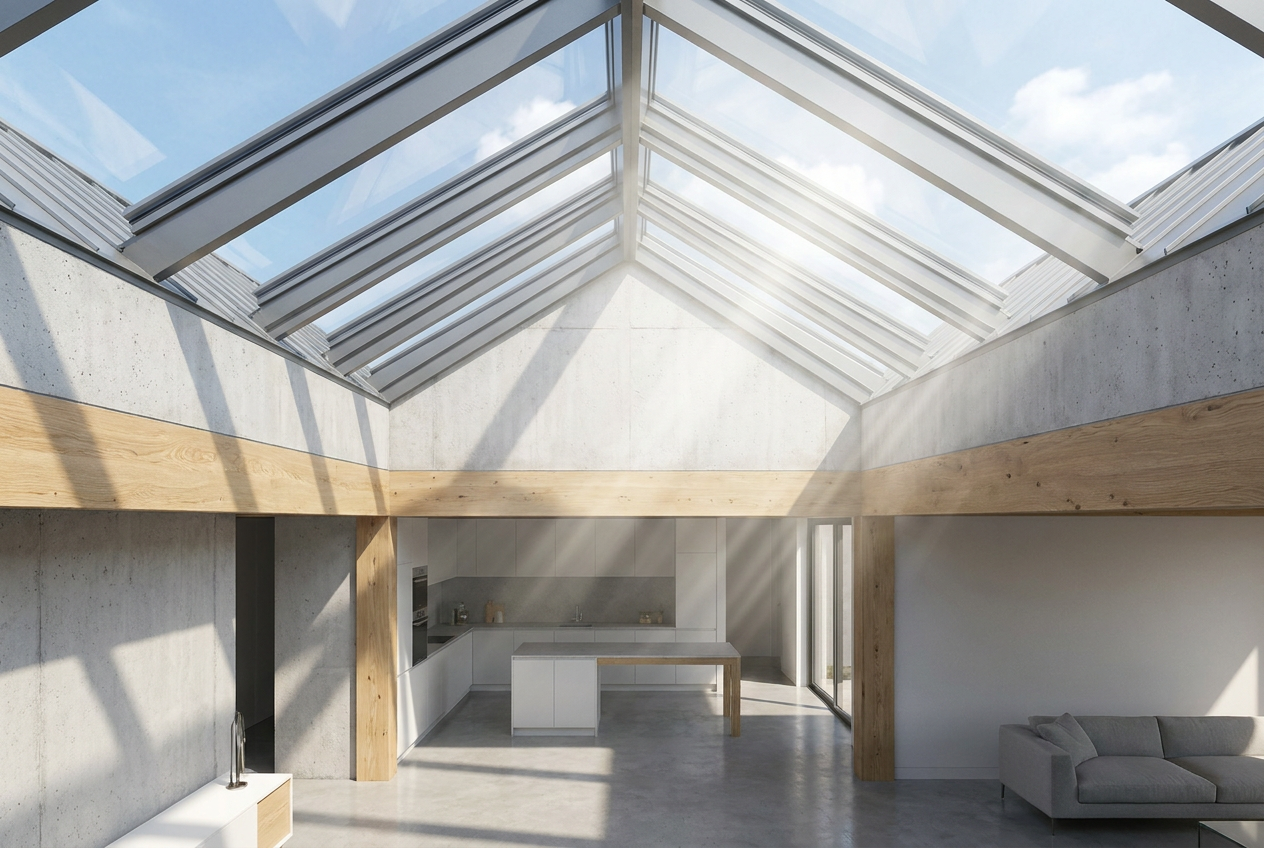
For commercial builders, property developers, and glazing wholesalers, natural daylighting is no longer just an aesthetic choice; it is a fundamental requirement for sustainable, high-value real estate. Skylights play a key role in achieving these modern architectural standards.
When planning a high-end villa project or a commercial complex, sourcing from a reliable custom aluminum skylights manufacturer in China represents a highly competitive option. Chinese factories offer cost savings of up to 50% compared to Western suppliers, combined with advanced OEM/ODM customization and state-of-the-art aluminum extrusions.
However, importing custom skylights requires a rigorous understanding of structural safety, insulation standards, wind loads, and import compliance. This guide serves as an architectural blueprint for commercial builders looking to source high-performance custom skylights directly from China.
Technical Specifications: The Anatomy of a High-Performance Skylight
Unlike standard windows, skylights are exposed to direct vertical sunlight, severe overhead weather conditions, and extreme temperature variations. Therefore, they demand a higher class of structural engineering.
1. High-Grade Aluminum Frames
A premium custom aluminum skylights manufacturer uses 6063-T5 high-strength aluminum alloy. T5 tempering ensures exceptional structural strength, preventing frame warping under heavy snow loads or wind pressure.
- Wall Thickness: For overhead structures, frame profiles must have a minimum wall thickness of 2.0mm to 3.0mm to handle dead load and dynamic environmental pressure.
- Thermal Break Technology: The aluminum profile must incorporate a continuous low-conductive polyamide nylon barrier (such as PA66 GF25) to block heat bridging, which keeps indoor environments energy efficient and stops condensation.
2. Advanced Glazing Requirements (Overhead Safety Glass)
Overhead glazing must strictly adhere to international safety codes to prevent injury in case of breakage.
- Inner Pane (Laminated Glass): The inner pane must be laminated safety glass (e.g., 5mm Tempered + 1.14mm PVB/SGP + 5mm Tempered). If the glass breaks, the PVB/SGP interlayer holds the fragments together, preventing them from falling into the building.
- Outer Pane (Tempered Low-E Glass): The outer pane should be tempered glass (minimum 6mm) with Low-E (low-emissivity) coatings to block infrared and ultraviolet solar rays, preventing indoor overheating.
- Gas Fill: The cavity between the panes must be filled with Argon gas (90% concentration) and sealed with warm edge spacer bars to achieve a low U-value (below 1.8 W/m²K).
3. Integrated Water Drainage Systems
Water leakage is the most common failure point for poorly engineered skylights. Premium custom systems feature a multi-tier water drainage channel:
- Secondary Condensation Channels: Built-in internal aluminum channels that collect and drain micro-condensation out of the building.
- EPDM Gaskets: High-grade, weather-resistant Ethylene Propylene Diene Monomer (EPDM) dual-seal gaskets that remain flexible in temperatures ranging from -40°C to 120°C.
Global Compliance and Testing Standards
Before importing custom skylights, builders must verify that the Chinese manufacturer holds active, verified certifications conforming to local building codes:
| Target Market | Standard / Code | Key Compliance Focus | Certification Name |
|---|---|---|---|
| Australia & NZ | AS2047 / AS1288 | Water penetration, structural deflection, overhead glass safety | AS2047 Certificate |
| North America | NFRC / AAMA | Energy star rating, U-factor, solar heat gain coefficient (SHGC) | NFRC Certified |
| European Union | EN 14351-1 | Structural resistance, wind load pressure, impact resistance | CE Mark |
Richocean ensures that all custom aluminum skylights undergo rigorous testing in accordance with NFRC, AS2047, and CE standards, guaranteeing seamless site inspections and structural peace of mind.
How to Conduct Wind-Load and Structural Calculations for Skylights
To ensure safety, a commercial builder must provide the manufacturer with accurate project site data to calculate structural requirements:
1. Calculate the Design Wind Pressure (DP): Based on the project’s geographic region, building height, and surrounding terrain (e.g., coastal vs. urban).
2. Determine the Maximum Deflection: Under maximum wind load, the frame deflection must not exceed L/175 of the span length to prevent glass cracking.
3. Analyze the Tilt Angle: Skylights must be installed at a minimum slope of 15 degrees to allow self-cleaning by rainwater and prevent standing water accumulation.
A professional manufacturer will run 3D Finite Element Analysis (FEA) based on these inputs to customize the profile thickness, glass build, and anchorage points.
Step-by-Step Bulk Sourcing Checklist
When importing from a custom aluminum skylights manufacturer, builders should follow this structured sourcing workflow:
Step 1: Initial CAD / 3D Design Consultation
Provide the manufacturer with your architectural drawings. A professional factory will produce customized 3D renderings, cross-section shop drawings, and suggest profile finishes (e.g., fluorocarbon powder coating or anodizing) to match your exterior style.
Step 2: Sample Validation
For large-scale projects, request a fully functional prototype sample. Perform water tightness and air infiltration tests on-site before signing off on full-scale mass production.
Step 3: Logistics and 5-Layer Damage-Free Packaging
Skylights contain large, heavy panes of overhead glass, making transport a critical phase. Ensure your manufacturer utilizes a 5-layer packaging system:
1. Surface protective film on all aluminum surfaces.
2. High-density pearl cotton foam wrapping around the entire frame.
3. Heavy-duty corrugated cardboard corner protectors.
4. Plywood non-fumigation crates designed for easy forklift handling.
5. In-container shock-absorbers and fastening straps to prevent transit shift.
Frequently Asked Questions (FAQ)
What is the best glass configuration for custom skylights?
Overhead skylight safety codes require a double-glazed unit with a tempered outer pane and a laminated inner pane (e.g., 6mm Low-E Tempered + 12Argon + 5mm+1.14PVB+5mm Laminated). This ensures that if the glass breaks, the fragments remain adhered to the laminate layer.
How do custom aluminum skylights prevent condensation?
High-quality skylights prevent condensation by using a thermal break aluminum profile combined with a warm edge spacer bar. This breaks the cold-bridging effect, keeping the inner frame temperature above the dew point, and uses internal drainage paths to eject any micro-moisture.
What certifications should a custom skylight manufacturer hold?
For global exports, the manufacturer must hold market-specific certifications such as AS2047 for Australia, NFRC for the United States and Canada, and CE markings for European Union countries.
Conclusion: Partner with Richocean for Structural Excellence
Custom aluminum skylights are premium architectural elements that require elite engineering, flawless thermal break profiles, and compliant safety glazing. Sourcing from a specialized factory like Richocean allows you to deliver high-performance, beautiful, and safe overhead glazing systems directly to your construction site at wholesale prices.
Contact our expert B2B engineering team today to request custom 3D shop drawings, structural wind-load analysis, and a comprehensive bulk factory quote for your upcoming project.