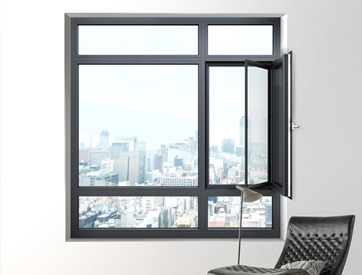
Windows for Houses Factory in China – Aluminum Windows and Double Glazed Specifications
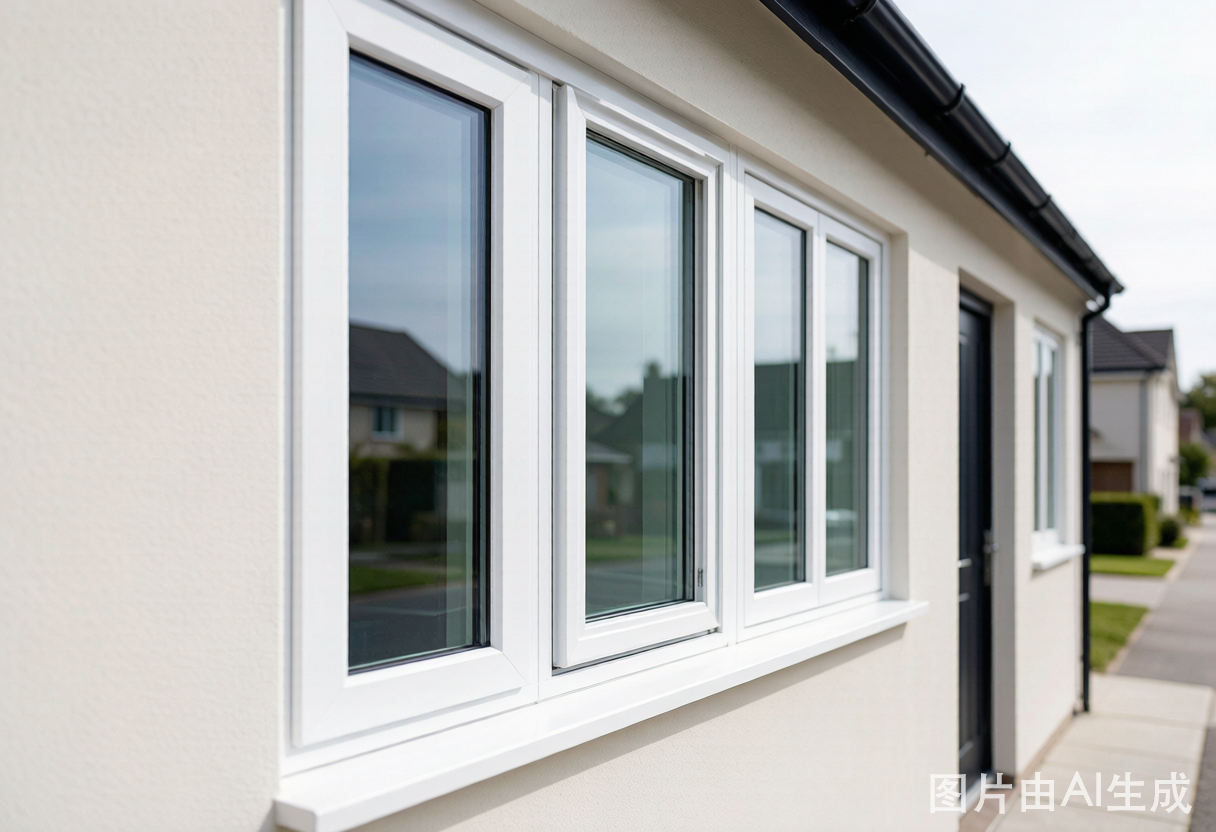
Windows for Houses Factory in China – Aluminum Windows and Double Glazed Specifications
China-based aluminum window factories supply residential window systems across 40+ export markets. This article documents the alloy grades, extrusion parameters, thermal break specifications, glazing configurations, and pricing structures for windows for houses manufactured in Foshan and Guangdong production hubs.
Aluminum Windows for Houses: Alloy Grades and Extrusion Parameters
Alloy Designations and Mechanical Properties
Aluminum windows for houses use specific alloy grades that balance strength, formability, and corrosion resistance. The three most common alloys in China window factories are:
6063-T5 accounts for 85% of residential window extrusions from China factories. The T5 temper (air-cooled after extrusion) provides sufficient yield strength at 110 MPa while maintaining cost efficiency. T6 (water-quenched and aged) raises yield to 180 MPa for hurricane-rated and coastal installations.
Surface Treatment Parameters
China aluminum window factories apply three surface treatment systems:
Powder coating at 80um average film thickness meets AAMA 2604 specifications for color retention and corrosion resistance. PVDF 2-coat systems (30um minimum) satisfy AAMA 2605 for projects requiring 20-year finish warranties, commonly specified for villa and resort windows.
House Windows Pricing Table: Cost Breakdown by Configuration
Standard Configuration Pricing
House windows from China factories follow a tiered pricing structure based on profile series, glass type, and opening mechanism. All prices are FOB Shanghai/Guangzhou in USD per square meter:
A 65-series double-glazed sliding window at $35-48/m2 represents the median specification for house windows. Adding thermal break polyamide strips raises pricing by $8-15/m2 depending on strip width (14mm, 18mm, 24mm, or 28mm).
Premium Configuration Cost Adders
A 70-series casement window with thermal break, Low-E double glazing, argon fill, and ROTO hardware reaches $70-90/m2 FOB – approximately 3x the base single-glazed price but delivering U-values below 1.5 W/m2K.
Double Glazed Windows: U-Value and Thermal Performance Data
Insulation Performance by Glass Configuration
Double glazed windows reduce heat transfer by 40-65% compared to single-glazed units. The following table shows measured U-values (W/m2K) for common configurations tested per ISO 10292:
Double glazed windows with 16mm argon-filled gaps and double-silver Low-E achieve U-values of 1.2-1.3 W/m2K, meeting European EN 14351-1 Class C requirements and passive house thresholds (U 0.80 W/m2K or less achievable with triple glazing).
Sound Reduction Ratings
Laminated double glazed windows with asymmetric glass thickness (8mm + 6mm) and PVB interlayer deliver Rw 42 dB, suitable for houses within 500m of highways or rail lines.
Aluminum Window Frame Specifications: Wall Thickness and Thermal Break Data
Profile Wall Thickness Standards
Aluminum window frame wall thickness determines structural integrity and wind-load resistance. China factories produce profiles at three standard thickness tiers:
GB/T 5237-2017 mandates minimum 1.4mm wall thickness for residential aluminum window frames. For houses in coastal or hurricane-prone regions, 2.0mm profiles with 6063-T6 temper provide the 2,400 Pa wind resistance required by Miami-Dade NOA protocols.
Thermal Break Strip Specifications
Polyamide 66 (PA66-GF25) thermal break strips create an insulated barrier between interior and exterior aluminum halves:
The 24mm PA66 strip is the default specification for house windows exported to European and North American markets. It balances thermal performance (frame U-value 2.8 W/m2K) with crimping reliability at 50kN roll-in force. Combined with Low-E double glazing, total window U-values reach 1.2-1.5 W/m2K.
Quality Certifications and Compliance Standards for China Window Factories
International Certification Requirements
China window factories targeting house window exports must hold and test against multiple international standards:
Miami-Dade NOA requires passing TAS 201 (large missile impact with 2×4 lumber at 50 ft/s), TAS 202 (uniform static pressure cycling plus/minus 1,200 Pa), and TAS 203 (small missile impact with steel balls at 80 ft/s). Only factories with 2.0mm wall thickness profiles and laminated glazing achieve this rating.
Water and Air Tightness Test Data
Factories producing casement windows achieve GB/T 7106 Level 8 across air, water, and wind metrics. Sliding configurations typically reach Level 6-7 due to inherent seal design differences.
Procurement Data: MOQ, Lead Time, Payment and Shipping Specifications
Order Parameters
Aluminum price fluctuation impacts window pricing directly. Factories peg quotations to the Shanghai Futures Exchange aluminum index, with price validity of 30 days standard or 60 days with an index-lock clause (plus/minus 3% tolerance band).
Packaging and Shipping Specifications
For sliding windows and aluminum doors and windows orders above 300 m2, factories provide free crating design optimization to maximize container fill rates, reducing per-m2 shipping cost by 8-12%.
Installation Technical Data for House Windows
Frame-to-Wall Connection Methods
Three installation methods dominate residential house window applications:
Direct-fix installation suits brick and concrete wall houses with 10-15mm gaps. Steel sub-frame systems are standard for reinforced concrete high-rise residential towers, providing adjustment tolerance of plus/minus 5mm per direction.
Waterproofing and Commissioning Protocol
Waterproofing sequence for house window installations:
1. Clean reveal surfaces – remove dust, oil, loose mortar
2. Apply backer rod (PE foam rod, 1.3x gap diameter)
3. Apply interior sealant – neutral-cure silicone, continuous bead
4. Inject exterior PU foam – low-expansion type, fill 70% of cavity depth
5. Apply exterior sealant – weather-resistant silicone with UV stabilizers
6. Flashing tape – apply self-adhesive butyl tape at head and sill joints
7. Commissioning checks – operate all sashes 5 cycles, verify gasket compression 30%+, test drain holes with 500mL water pour
Drainage weep holes (minimum 2 per frame, 8mm diameter) must show free water passage within 30 seconds of the 500mL test pour. Blocked weep holes cause water ingress within 12 months of installation.
Client Project Reference Data
Residential Project Specifications
The Dubai villa project specified 70-series thermal-break casement windows with ROTO hardware at $78/m2 FOB, landing at approximately $105/m2 CIF including freight and insurance. Compared to local UAE window suppliers at $180-250/m2, the China factory supply reduced total window cost by 58% while meeting CE and local Dubai municipality approval standards.
Performance Comparison: Single vs. Double vs. Triple Glazing
Triple-glazed house windows deliver 0.78 W/m2K U-values meeting passive house (Passivhaus) criteria, with annual energy savings of 180 kWh/m2 versus single-glazed baseline. The $55/m2 FOB price point makes passive house windows from China factories 60-70% less expensive than European equivalents at $140-200/m2.
For buyers evaluating windows for houses from China factories, the decision matrix centers on three variables: target climate zone (which determines required U-value), project scale (which sets MOQ and container efficiency), and local certification requirements (CE for Europe, NFRC/AAMA for North America, AS 2047 for Australia). A 65-series thermal-break sliding window with Low-E double glazing at $35-48/m2 FOB covers the requirements of 70% of residential house projects globally, making it the default starting specification for procurement discussions with China window factories.