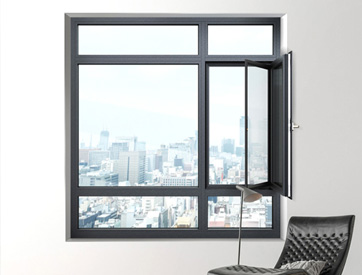
Ventanas de Aluminio y Cristal Wholesale in China: CTE Uw, Correderas AEV & FOB Pricing
2. Perfiles de Aluminio
3. Ventanas Correderas
4. Puertas y Ventanas Package
5. Apertura Types
6. AEV & Marcado CE
7. DB-HR Acoustics
8. Factor Solar
9. Cristal & Glazing
10. FOB Price Tables
11. Production Process
12. Certifications
13. Procurement & Logistics
14. Installation Method
15. Project Case
16. Material Comparison
17. RFQ Checklist
18. Glossary
Ventanas de Aluminio y Cristal: CTE DB-HE Uw Limits by Zona Climática
Spain rates a window by the U value of the whole hueco (opening assembly), not by the glass alone. CTE DB-HE1 Table 2.1 gives the maximum transmitancia for huecos per zona climática. The zone letter (α, A, B, C, D, E) is set by winter severity; the number that follows (1 to 4) is summer severity. Alicante is B3, Madrid D3, Barcelona C2, Bilbao C1, Burgos E1, Sevilla B4, Málaga A3.
Uw Ladder: 2013 Values vs Current Consolidated Text
CTE DB-HE1 Table 2.1, transmitancia térmica límite de huecos (Uw). Values in W/m²K.
The 2013 column is included because a large share of the Spanish replacement market still holds quotations written against the old ladder. A frame that passed at 2.70 in Burgos in 2013 fails the current 1.80 by a wide margin, and that gap is the single most common reason a low quotation is rejected at the visado stage.
Which Frame Build Reaches Each Zone
Uw is a weighted sum of the frame area (Uf), the glazing area (Ug) and the spacer linear loss (Ψg). For a standard 1.23 × 1.48 m reference window, the frame accounts for roughly 25–30% of the opening, so the profile choice moves Uw by 0.3–0.8 W/m²K on the same glass.
The A-zone row is the one to watch. With a 14 mm break and an aluminium spacer the result lands at 2.62 against a 2.70 limit — the margin is inside the calculation tolerance of most CTE tools. Swapping the aluminium spacer for a warm-edge profile costs USD 6–9/m² and drops Uw to about 2.51, which puts the calculation outside the rejection band.
Perfiles de Aluminio para Ventanas: Alloy, Wall Thickness and Thermal Break
A perfil de aluminio para ventanas is defined by four numbers: alloy and temper, wall thickness, section depth, and polyamide break width. Everything downstream — Uf, wind resistance, max sash size, price — follows from these.
Alloy and Temper: 6063-T5, 6060-T66, 6061-T6, 6082-T6
Export window profiles are extruded from 6xxx series Al-Mg-Si. The temper determines the mechanical values the section carries in the UNE-EN 755-2 tables.
6063-T5 covers about 80% of a residential order. 6060-T66 is specified where the architect wants a 35–45 mm sightline and the section must still hold a 2.0 mm wall at tight radii. 6061-T6 and 6082-T6 appear only in mullions and coupling sections; using them across the whole frame adds 12–18% to the billet cost with no thermal benefit.
Wall Thickness: 1.4 / 1.6 / 1.8 / 2.0 mm
Nominal wall thickness is measured on the main load-bearing faces. The choice is driven by sash area and by the wind load of the zona eólica, not by preference.
Zona eólica per CTE DB-SE-AE: A = 26 m/s (qb 0.42 kN/m²), B = 27 m/s (0.45), C = 29 m/s (0.52). Sites above 200 m altitude or on exposed coast use the next class up.
Thermal Break: PA66 GF25 Width vs Uf
The break is a polyamide 66 strip reinforced with 25% glass fibre, rolled or injected into the section channel. Width is the only variable that changes Uf materially; 14 mm to 34 mm covers the whole Spanish market.
Going from 20 mm to 24 mm costs USD 12–14/m² and moves Uf by 0.30, which is usually cheaper than upgrading the glass from a 4/16/4 Low-E to a triple unit (USD 28–36/m²) for the same 0.2–0.3 Uw gain.
Ventanas de Aluminio Correderas: Sliding System Performance Data
Ventanas de aluminio correderas is the highest-volume Spanish search term in the sliding family and the configuration where most specifications are wrong. A sliding sash seals on brush or fin piles, not on compression gaskets, so its AEV ceiling is structurally lower than a casement.
Sliding vs Casement: Measured AEV
A standard two-panel corredera at Class 2 air permeability and 5A water tightness does not satisfy a facade in zona eólica C, or any opening above the third floor in Galicia or the Cantabrian coast. The lift-and-slide (elevable) variant closes the gap for USD 40–65/m² extra in hardware.
Roller, Track and Sash Weight Limits
- Roller: stainless 304 body, 42–58 mm diameter, sealed bearing, rated 80 / 120 / 180 kg per unit.
- Track: stainless 304 rail insert over the aluminium extrusion; a worn extruded track is the main field failure after year 7.
- Max sash weight: 80 kg for standard, 180 kg for lift-and-slide, 300 kg for heavy elevable with tandem rollers.
- Glazing pocket limits sash thickness to 24–34 mm on a 2-panel corredera, 38–52 mm on elevable.
- Bottom weep: two 5 × 25 mm slots per outer track, drained to the outside face; blocked slots are the No.1 water claim.
For the full sliding specification set, including roller replacement intervals and track drainage geometry, see aluminium sliding window wholesale specifications.
Puertas y Ventanas de Aluminio: Whole-House Package Scope and Cost
Puertas y ventanas de aluminio as a single line item is how Spanish promotores buy. One supplier carries the facade carpentry, the entrance door, the terrace sliding doors and the shutter boxes, which removes the interface risk between three trades.
Package Bill of Materials per 120 m² Dwelling
A 120 m² dwelling carries 21–23 m² of carpentry, which at current FOB rates is USD 3,900–4,600 per dwelling before freight. An order of 40 dwellings therefore sits at 872 m² and clears the 500 m² price tier by a wide margin.
Package vs Window-Only: Cost per m²
The saving is not a discount. It comes from one extrusion run, one powder batch and one container — the mixing cost of a second supplier’s RAL match and a second container’s LCL break-bulk is what the promotor pays when the order is split.
Ventanas de Aluminio: Apertura Types and Hardware Sets
Spanish specification language names the opening, not the frame. Quoting the wrong apertura is a common translation error on export orders.
Four Aperturas and Their Hardware
Sizing Rules That Drive Price
- A sash above 1.30 m width needs a 1.8 mm wall and a reinforced mullion; above 2.30 m height, 2.0 mm.
- Oscilobatiente hardware weight limit is 130 kg per sash; above that use a fixed lower panel plus a tilt top light.
- Glass weight drives the sash: 4/16/4 is 20 kg/m², 6/16/6 is 30 kg/m², triple 4/12/4/12/4 is 30 kg/m² plus frame.
- Every 100 mm of extra sash height beyond 1,800 mm adds roughly USD 6/m² in section and hardware load class.
- Corner and bay combinations need a coupling mullion at 6063-T6 minimum; the splice is priced per linear metre at USD 18–26.
Dimensional and combination data for the same frame family is documented in house window specifications and FOB pricing.
AEV Classification and Marcado CE under UNE-EN 14351-1
The three-letter block on every Spanish window quotation is AEV: Aire (permeabilidad al aire), Estanqueidad al agua, Viento. Each is a separate test standard and a separate number on the declaration of performance.
Permeabilidad al Aire — UNE-EN 12207
Measured as air loss per m² of opening at increasing pressure; the class is set by the worst of the positive and negative pressure results.
Estanqueidad al Agua — UNE-EN 12208
Two series: A for openings the standard considers unprotected, and B where the opening is protected by an overhang or recess. The class number maps to a test pressure.
The 7B ceiling matters: an opening classified under the B series cannot be declared above 300 Pa. If the project is on an exposed facade, the test must be run and declared as an A-series result, which means the frame drainage and gasket specification has to support it, not just the paperwork.
Resistencia al Viento — UNE-EN 12210
Deflection is reported as a fraction of span — L/200 under P1 for a mullion, L/150 for a transom carrying glass. A Spanish project at 2.0 kN/m² design pressure typically lands on C4 with a 1.8 mm or 2.0 mm wall; 1.4 mm cannot reach C3 on a 2.1 m sash.
Marcado CE: System 3 and the DoP
Windows and external pedestrian doors are CE marked under UNE-EN 14351-1 with assessment system 3: the factory runs initial type testing at a notified laboratory and maintains factory production control. The declaration of performance (DoP) must carry, at minimum:
- Resistencia térmica — Uw (W/m²K), calculated per UNE-EN ISO 10077-1 or 10077-2.
- Permeabilidad al aire, estanqueidad al agua, resistencia al viento — the three AEV classes.
- Aislamiento acústico — Rw (C; Ctr) in dB, measured per UNE-EN ISO 10140 / 717-1.
- Sustancias peligrosas — declaration of none, or a national annex entry.
- Durabilidad — declared as the operating cycle class in the same standard.
- Ability to be cleaned, ventilation devices, and (where relevant) bullet resistance or behaviour between fire compartments.
DB-HR Acoustics: D2m,nT,Atr, Rw and Glass Builds
CTE DB-HR sets the acoustic target as an in-situ normalised level difference, not as a laboratory Rw. The window has to be sized against the measured exterior day level Ld at the plot.
DB-HR Table 2.1 Ladder
The conversion from a laboratory Rw to the in-situ D2m,nT,Atr is not one to one. The rule of thumb used on Spanish projects is Rw ≈ required D + 1 dB at the low end and Rw ≈ D + 5 dB at the high end, because flanking through the wall and the shutter box grows as the required isolation rises.
Glass Build vs Rw, C and Ctr
Ctr is the correction that matters for road traffic, which is the dominant source on Spanish urban plots. A 4/16/4 unit with Rw 31 and Ctr −4 delivers 27 dB of traffic isolation; the same frame with a 0.76 PVB acoustic laminate reaches 34 dB — a 7 dB improvement for about USD 18–24/m² of glass.
Factor Solar, Control Solar and Low-E Selection
Spanish cooling demand turns the glass specification upside down. In zona climática 3 and 4 the summer gain through the glazing is the largest single load in the building, and a window that performs well in Burgos will overheat a dwelling in Sevilla.
g-Value and SHGC by Coating
The rule for Spain: north and east facades take a high-g low-E (0.60–0.65) to collect winter gain; south and west take solar control at g 0.27–0.36. Specifying one coating for the whole building is the most common thermal specification error on export orders, and it costs 8–14 kWh/m²a of cooling demand on a B4 plot.
Cajón de Persiana: The Thermal Bridge Nobody Declares
The roller shutter box is part of the hueco under the CTE calculation. A standard non-insulated box adds 0.15–0.35 W/m²K to the opening Uw.
On a 1.20 × 1.40 m window in Madrid (zona D3, limit 1.80), the difference between an uninsulated box and a monoblock is the difference between 1.94 (fails) and 1.68 (passes). The box costs USD 54 more per unit; the alternative is re-engineering the whole frame.
Cristal: Glazing Build-Ups, Tempering and Safety Classification
Cristal is 70–80% of the visible window area and the part that carries the safety obligation under CTE DB-SUA.
Double and Triple Glazing Configurations
Argon fill delivers about 0.3–0.4 W/m²K over air; the warm-edge spacer delivers a further 0.1–0.15 and, more importantly, raises the internal surface temperature at the rebate by 2–3 K, which keeps the frame edge above the dew point in a Spanish winter at 20 °C / 60% RH.
Tempering and Safety per EN 12150 and EN 12600
CTE DB-SUA requires safety glass where there is a risk of human impact: doors, glazing below 0.90 m, and large panes in schools and commercial space.
Tempered glass per UNE-EN 12150: surface compression ≥ 90 MPa, four-point bending strength ≥ 120 MPa, fragmentation count ≥ 40 particles in a 50 × 50 mm square.
Tempering adds USD 6–9/m² and a 5–7 day step to the schedule, because tempering is done on a separate line from the IGU assembly. Laminating adds USD 12–18/m² and cannot be cut after autoclaving — every laminated pane must be sized before the order goes to the furnace.
FOB Price Tables — USD by Series and Volume
All figures below are FOB China (Shenzhen or Foshan), per square metre of finished opening, glazing included, excluding freight, insurance and Spanish import VAT.
Price Matrix: Series × Order Volume
USD/m² FOB. Base configuration: RAL 7016 or 9016 powder coat, 4/16Ar/4 Low-E double glazing, standard hardware. Triple glazing and solar-control coatings priced separately.
Options and Add-On Pricing
Landed Cost Model to Valencia
Budgetary comparison against the same frame family: low-price aluminium window cost data and the supplier list in Foshan doors and windows supplier specifications.
Production Process: From Billet to Packed Window
Nine stations run between the billet and the container. Each one has a measurable control point; the numbers below are the ones that get checked on a factory audit.
Extrusion and Ageing
- Billet: 6063 aluminium, homogenised at 560 °C for 6 h, cast in Φ 90–178 mm logs.
- Extrusion: billet 460–500 °C, container 420–450 °C, exit speed 8–25 m/min by section weight.
- Quench: air or water spray; the cooling rate fixes the Mg2Si precipitation available for ageing.
- Stretch straightening: 0.5–1.5% permanent elongation, twist tolerance 0.3 mm per 300 mm.
- Artificial ageing: T5 at 200 °C for 2 h, or T6 solution treatment 530 °C then 175 °C for 8 h.
- Hardness check: 6063-T5 must read 60–75 HB (Webster B); below 58 HB the batch is re-aged.
Surface Treatment: Powder and Anodising
Salt spray is the number buyers ask for, but it is not the number that predicts coastal failure. The filiform corrosion test (ISO 4623, 1,000 h at 40 °C / 82% RH after scribing) separates a good pretreatment from a bad one far more reliably on a Mediterranean coast plot.
Thermal Break Insertion and Assembly
- Break strip: PA66 GF25, supplied as coil or cut length; moisture content below 0.2% before rolling.
- Knurling: the section channel is knurled at 0.4–0.6 mm depth before the strip is rolled in.
- Roll-in: three-roll head at 12–18 m/min, pull-out resistance tested at each set-up.
- Pull-out test: ≥ 24 N/mm per ISO 14024 sampling; samples cut at the start, middle and end of each shift.
- Corner crimping: 4-point crimp, corner strength ≥ 300 N per crimped corner on a 1.6 mm wall.
- Glazing: setting blocks at L/4, silicone structural bond 6 × 12 mm, wedge gasket on the dry side.
A corner crimp failure is the single largest source of transport damage on export orders. Corner strength below 250 N on a 2.1 m sash will open on the container journey, even with correct packing.
Certifications Held and What Each One Actually Covers
Certificates on a Spanish order are not interchangeable. Each covers a different scope, and the dirección de obra will ask for the scope, not the logo.
Product Certification vs Factory Certification
A factory that holds ISO 9001 and Qualicoat but no EN 14351-1 file cannot CE mark a window. The ISO certificate covers the management system; the CE declaration covers the product. Buyers frequently accept the former by mistake, and the error surfaces at the visado or, worse, at final occupation certification.
How to Verify a CE File in Ten Minutes
- Check the notified body number against the NANDO database; a four-digit number that does not appear is a red flag.
- Match the product description on the certificate to the ordered serie — a file covering ‘fixed windows’ does not cover an oscilobatiente sash.
- Confirm the declared Uw is calculated for the ordered size, not for a smaller reference window.
- Check the DoP revision date against the current harmonised version of EN 14351-1.
- Ask for the raw test report numbers behind the declared AEV classes, not the summary sheet.
Procurement Data: MOQ, Lead Time, Payment, Packaging, Container Load
Commercial terms for export orders to Spain are standardised across the Foshan and Guangdong manufacturing base. The values below are the ones actually written into proformas.
Commercial Terms
Packaging Specification
- Frame: 0.08 mm PE sleeve, then 5 mm EPE foam, corner protectors in 2 mm ABS.
- Glass: crated separately in A-frame steel racks, 12–18 panes per rack, 10 mm rubber separators.
- Sash and frame are shipped glazed for standard sizes; glass is crated separately above 2.1 m height.
- Bundles: 6–10 units per bundle, steel strapped, each bundle on a 100 × 100 mm timber skid.
- Container: 40HQ with 8 mm plywood flooring check, desiccant 2 kg per 10 m³, moisture barrier wrap.
- Marking: bundle number, unit reference, room code and floor — required for site distribution.
40HQ Container Loading Calculation
Because volume binds before weight, a 40HQ is the right unit and a 20GP is false economy — a 20GP takes 88 units at 131 m², and the freight per m² rises by roughly 65%. Orders above 620 m² should ship as two 40HQ rather than one 40HQ plus LCL.
Installation Method: Eight Steps and Three Failure Points
Spanish site practice for window installation follows the NTE and the CTE DB-HE guidance on the junction between the carpentry and the wall. The window does not fail in the factory; it fails at the perimeter joint.
Eight-Step Sequence
- Replanteo. Verify the obra opening against the manufacturing drawing. Tolerance ± 10 mm on width and height, ± 5 mm on diagonal difference. Anything beyond that needs a shimmed subframe.
- Preparación del hueco. Remove loose mortar, fill voids, apply a primer on absorbent surfaces. The reveal must be flat to 3 mm over 2 m.
- Colocación del premarco (where used). A galvanised steel or aluminium subframe is fixed with M8 anchors at 400–600 mm centres, packed with non-shrink mortar.
- Fijación de la carpintería. Anchor through the outer frame chamber only, 150 mm from each corner and then at 500–700 mm centres. Anchors must never pass through the polyamide break.
- Nivelación y aplomado. Check with a 2 m level: vertical deviation ≤ 2 mm, horizontal ≤ 1.5 mm. Shim at load points only, never at mid-span, or the sash will bind.
- Sellado interior (barrera de vapor). Butyl tape or a vapour-tight membrane on the warm side, continuous around the opening and bonded to the wall substrate.
- Sellado exterior (estanqueidad). Pre-compressed foam tape plus a UV-stable silicone bead; the outer seal must be vapour-open so any moisture in the joint can dry outward.
- Ajuste y verificación. Operate every sash twice, set the locking cam preload, check the weep slots are open, then torque-check the anchors.
The two-seal rule from steps 6 and 7 is the one most often skipped: inner airtight, outer water-tight and vapour-open. A single silicone bead on both faces is the standard cause of interstitial condensation in the joint, which then presents as a window that ‘sweats’ and gets blamed on the glass.
Three Failure Points Observed on Spanish Sites
Commissioning check before handover: a water spray test at 2 L/min·m² for 15 minutes per opening, a smoke pencil test at the perimeter joint with the sash closed, and a thermal camera scan at ∆T ≥ 12 K between inside and outside. All three take under two minutes per opening and catch roughly 90% of perimeter defects before the plasterer leaves.
Project Case: 54-Dwelling Block in Valencia (Zona B3)
Delivery data from a completed order: a four-storey residential block of 54 dwellings in the Huerta Sur area of Valencia, zona climática B3, zona eólica B, measured exterior noise Ld 63 dBA at the south facade.
Order Composition
Compliance Check Against CTE
Cost Comparison: Local Supply vs China Import
The saving is modest at 9.2% because installation labour, which is identical either way, is 22% of the installed cost. Where the import route separates itself is on specification density: the same budget bought a 20 mm thermal break with warm-edge spacers and solar-control glass on the south and west facades, which the local quotation had priced with a 14 mm break and clear float throughout.
The condensation result is the number the promotor quoted back. Existing units with a 14 mm break and an aluminium spacer ran a 13.1 °C interior frame surface, which is below the dew point of a 20 °C / 55% RH dwelling; the 20 mm break with warm edge moved that to 16.4 °C and removed the problem without changing the glazing.
Material Comparison: Aluminio, PVC and Madera-Aluminio
Three frame materials compete in Spain. The choice is made on Uf, maintenance cycle, maximum dimension and fire behaviour, in that order.
Selection by Building Type
Where Each Material Fails
Aluminium fails where the budget cannot carry a 20 mm break — below that width the frame Uf stays above 3.0 and the whole assembly cannot clear zona C without triple glazing. PVC fails above 1.6 m sash height without steel reinforcement, and reinforced PVC costs more than an equivalent aluminium section. Madera-aluminio fails on maintenance: the exterior lacquer cycle every 6–8 years is a real operating cost that Spanish community budgets rarely fund.
Aluminium wins where the opening is large or the building is tall: a 2.4 × 2.3 m terrace sliding door is outside the PVC envelope without steel reinforcement, and reinforcement removes the cost advantage. PVC wins on a small window in a cost-driven rehabilitation, provided the fire classification is acceptable for the building height. Madera-aluminio is an aesthetic specification, not a performance one.
RFQ Checklist: What to Send and What to Demand
A quotation for ventanas de aluminio y cristal can vary by 40% depending on what the enquiry specifies. The lists below close that gap.
Eight Technical Items to Send
- Zona climática CTE (letter + number) and zona eólica, with the municipality.
- Window schedule: reference, quantity, width × height, apertura type, floor level.
- Required Uw per opening, or the CTE limit you must clear.
- Required AEV classes, or the facade exposure and building height.
- Required D2m,nT,Atr per room type with the measured Ld at the plot.
- Glass specification: build, coating, spacer, tempering, safety class.
- Finish: RAL or anodising, plus the coastal distance if under 5 km from the sea.
- Shutter box type, or confirmation that the box is by others.
Eight Commercial Items to Demand
- Unit price per m² and per unit, with the volume tier stated in writing.
- Price validity and the aluminium ingot index clause, if any.
- Lead time measured from approved drawings, not from deposit.
- Payment structure and whether L/C is accepted above a stated value.
- MOQ per size and the tooling charge below it.
- Packaging specification and the number of containers the order fills.
- Warranty scope in years, split by frame, coating, hardware and glass seal.
- DoP revision date and the notified body number behind the CE mark.
Send both lists together. An enquiry that only asks for ‘windows, 1.20 × 1.40, aluminium’ will come back priced at Serie 50 with a 14 mm break and clear glass, and that unit fails zona C, D and E, and comes close to failing B.
Glosario: Spanish Specification Terms and English Equivalents
Terminology used on Spanish window schedules, with the export-side English equivalent. A mistranslated schedule line is the most expensive error on an export order, because the frame is extruded and powder-coated before anyone notices.
Product and Component Terms
Standards and Site Terms
A schedule written in English and read by a Spanish dirección de obra will be returned. Writing the schedule in the Spanish terms above, with the English equivalent in parentheses, removes one full review cycle from the approval process.
Related Products and Further Specifications
Specification Library
Further specification data across the same aluminium window and door families:
- Aluminium casement windows — factory specifications and pricing
- Sliding windows — wholesale specifications and pricing
- Double and triple glazed aluminium window frames
- House windows — villa and basement specifications
- Aluminium glass doors and sliding glass door specifications
- French doors and double door specifications
- Soundproof window specifications and pricing
- Ventanas de aluminio export — specifications and pricing
- Janelas de alumínio — export and FOB data
- Foshan doors and windows suppliers — specifications
- Low-price aluminium window cost data
One CE File, One Container
Every product family above is built on the same 6063-T5 extrusion base, the same PA66 GF25 thermal break supply, and the same EN 14351-1 declaration route, so a mixed order of windows, terrace doors and entrance doors ships under one CE file and one container.