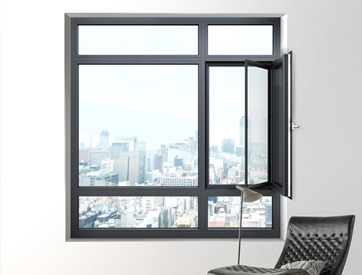
Janelas de Alumínio Supplier in China | ABNT & FOB Data
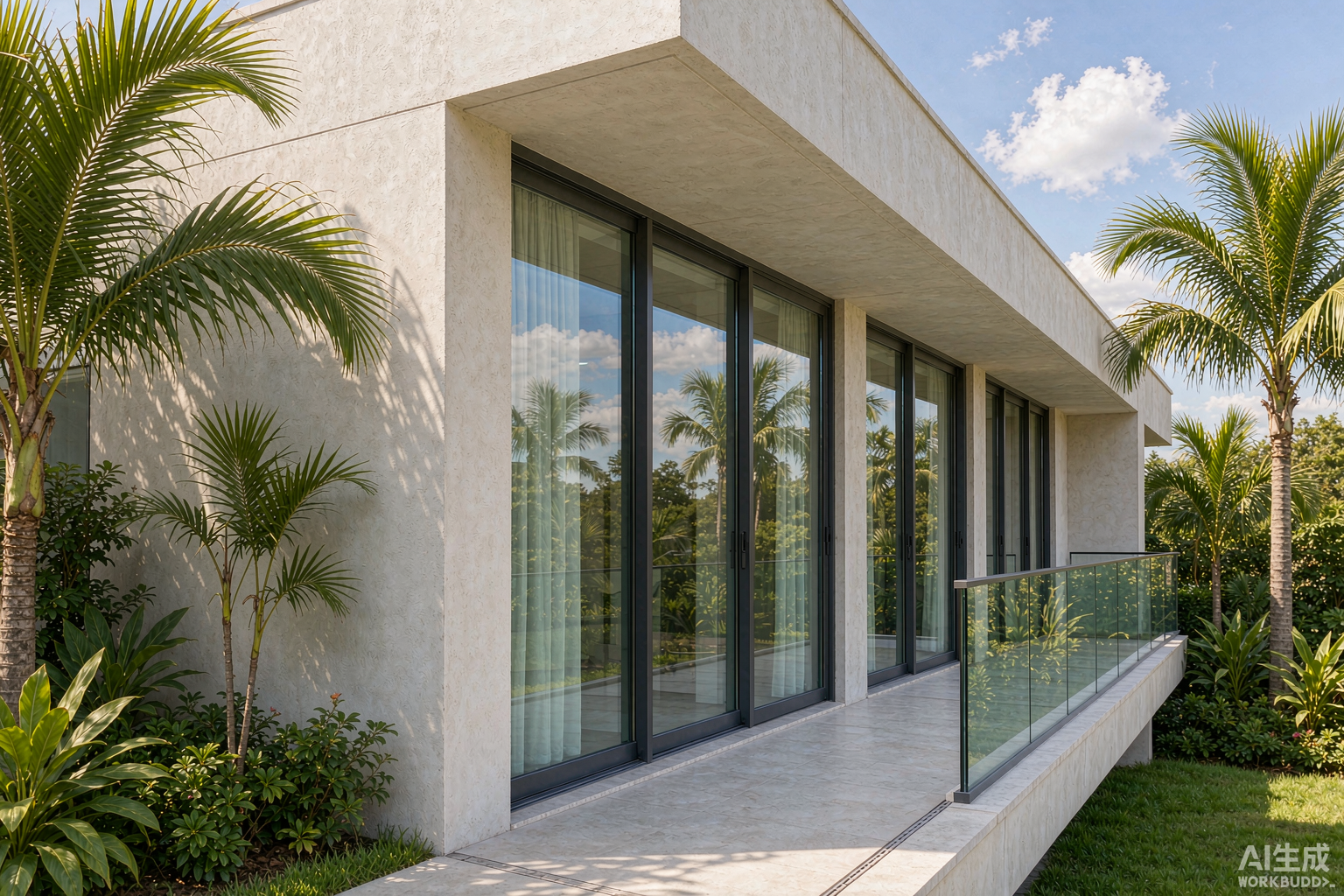
Janelas de alumínio, janelas de correr – aluminum sliding windows – are the default residential opening in Brazil and a standard retrofit item in Portugal: two to four leaves running on twin tracks, a mosquito screen mounted on the frame at the factory, and tempered glass as standard. This article documents the Brazilian sizing modules, NBR 15575 performance compliance, thermal-break system construction, U-values, FOB price bands, container loading, and the full import cost stack at a Brazilian port, with data tables for each step.
ABNT Standards That Govern Janelas de Correr
Brazil does not import frames under loose factory specs. The ABNT (Associação Brasileira de Normas Técnicas) standards below are the reference set a buyer should paste into the purchase order, and every performance number later in this article traces back to one of them.
For Portugal, the export build is CE marked under EN 14351-1 with declared performance for U-value, air permeability and water tightness, so the same frame ships to Lisbon or Porto without re-engineering. Brazilian buyers should ask the factory for the test report numbers behind each declared value – a report issued under NBR 10821-3 with the actual series designation is worth more than a brochure.
Certification and Test Report Package
- CE DoP under EN 14351-1 for Portugal; declared Uw, air class 4 and water class 8A on the label.
- Factory quality system: ISO 9001; coating lines certified Qualicoat (powder) and Qualanod (anodizing).
- Glass: EN 12150 tempered certificate and, on request, heat-soak report per EN 14179.
- Performance report per series – not per brochure: ask for the NBR 10821-3 or EN 1026/1027/12211 test sheet that matches the exact frame depth and glazing you are buying.
- Miami-Dade NOA is not required for Brazil or Portugal; specify it only for hurricane-market projects in the same order book.
Sizing Modules and Leaf Count for Brazilian Openings
Standard Opening Modules
Brazilian residential construction works on 10 cm masonry modules, and fenestration follows. The most ordered sliding window sizes for apartments and condomínios are:
A three-leaf, two-track window leaves two leaves overlapped on one track; effective ventilation is two thirds of the opening. Four-leaf two-track gives half. If full opening matters, a four-leaf three-track frame clears the entire span but adds frame depth and $18-30/m².
Ventilation Area Rules
- NBR 15575-4 requires the ventilation opening area to reach at least 12% of the floor area for living rooms and 10% for bedrooms in the PAS (performância) compliance route.
- Because a sliding window keeps 100% of its rough opening in glass, it meets these ratios more easily than casement sets, which lose 8-12% of opening area to the swing arc and frame mass.
- For bedrooms, a 1500×1300 window over a 10 m² room delivers 1.95 m² of glazing and 0.98 m² of clear vent – both comfortably above the rule.
Climate Zones and Thermal Requirements (RTQ-R)
Brazil is divided into eight bioclimatic zones (Z1 to Z8) under ABNT NBR 15220 and the national efficiency regulation RTQ-R. The window U-value limit tightens as you move south, while SHGC dominates in the tropical north. Typical values applied in specifications:
Condensation and Edge Details
Condensation risk appears only in Z1-Z3 and in air-conditioned interiors everywhere: the frame edge reaches 60-70% of room temperature. The two countermeasures are the warm-edge spacer (cuts edge U by about 0.2-0.3 W/m²K) and continuous EPDM at the glazing rebate. For Z1-Z2 projects, specify 24 mm break minimum plus warm-edge spacer and keep interior RH below 60%.
The sliding windows specified in this article reach whole-window Uw of 2.8 W/m²K with a 14 mm break, 2.1 with a 24 mm break and 1.6 with 34 mm break plus Low-E – every row clears the strictest Brazilian facade limit with margin.
System Construction: Alloy, Thermal Break, Finish, Rollers
Aluminum Alloy and Wall Thickness
Thermal Break System
The break strip is PA66GF25 – polyamide 66 with 25% glass fiber – rolled into knurled cavities at 230-250 °C, then crimped. Widths in this article’s series: 14 mm (basic), 24 mm (the volume seller for Z3-Z4), 34 mm (Z1-Z2 and Passivhaus-adjacent builds). Polyurethane-poured breaks are not used on sliding systems: the pour-and-debridge process limits leaf length and complicates the drainage cavities.
Surface Treatment Parameters
Brazilian stock colors: natural anodized silver, preto (black), antracite (RAL 7016) and branco (RAL 9016). Dark colors on west faces in Z5-Z8 should carry 80 μm minimum; powder over 100 μm slows production by 1-2 days.
Drainage and Air-Seal Detail
Each track carries two weep channels with a 5° inward slope and a 6 mm slot; the interlock line combines a twin-line brush with an EPDM fin. Frame-to-wall sealing on site uses a butyl tape backer plus one neutral-cure silicone bead outside and one inside. This detail is what keeps the measured air leakage at 1.6-2.2 m³/h·m² instead of the 3.0 m³/h·m² compliance ceiling.
Rollers, Tracks and Cycle Life
Roller selection rule: divide the calculated leaf weight by the roller pair rating and keep the result at ≤ 0.6-0.77, i.e. a 30-40% dynamic reserve. A 2.0×1.4 m leaf with 5+12A+5 glass weighs about 38 kg; the single-bearing 60 kg pair leaves 37% reserve – acceptable. The 2.0×2.1 m leaf at 55 kg forces the double-bearing set.
Mosquito Screen Options
- Fixed perimeter screen: aluminum frame 25×12 mm with fiberglass 18×16 mesh, clipped to the outer frame – the Brazilian standard build, quoted at $9-16/m² of window.
- Rolling (corrediça) screen: spring-loaded cassette on the third track, pulls sideways – adds $22-35/m².
- Stainless mesh 304: for ground-floor security-heavy projects, mesh swap only, +$6-10/m² over fiberglass.
- Factory-mounted screens arrive with the frame; no site assembly, and the mesh tension is set before packing.
NBR 15575 Performance: Compliance Table
ABNT NBR 15575-4 sets the minimum fenestration performance for habitational buildings: air permeability ≤ 3.0 m³/h·m², water tightness ≥ 100 Pa for facades up to 9 m (recommended 150 Pa in coastal exposure), wind-load safety checked against NBR 6123 wind speeds, and resistance to repeated opening loads. The table compares the compliance floor with measured values of the 24 mm thermal-break sliding series:
Reading the Compliance Numbers
- Air leakage below 2.0 m³/h·m² requires continuous twin brush seals at both interlocks plus corner gaskets – the single most common spec gap in cheap 1.4 mm builds.
- Water tightness on sliding systems is set by the sill: a stepped sill with 15 mm upstand and two weep channels per track reaches 300 Pa; a flush threshold reaches 100-150 Pa and belongs under covered balconies.
- Wind-load classification must reference the municipality’s V0 from NBR 6123 (33-48 m/s across Brazil); the factory should confirm the leaf deflection stays inside L/175 at design pressure.
Acoustic Data (Rw)
For comparison across other opening types, see the sliding door wholesaler spec sheet and the acoustic configuration tables in the windows-and-doors pack article.
Glass Configurations and Solar Control
IGU Options
Tempered Glass and Edge Work
- All glass is tempered (EN 12150 / NBR 14697 route) and heat-soak tested on request; door-height leaves and panels above 1.2 m² are tempered by default.
- Laminated inner pane uses PVB 0.76 mm (standard) or 1.52 mm (impact / sound upgrade); it holds fragments after breakage and adds 3-4 dB Rw.
- Spacer: warm-edge (SSP) standard on Low-E builds – cuts condensation at the edge by ~30% versus bare aluminum spacer.
- Thickness stock in Brazil: 4 / 6 / 8 mm, so 6 mm panes are the practical ceiling for single glazing; double glazing covers the rest.
Solar Control by Orientation
West and north glass in Z4-Z8 should be specified with SHGC ≤ 0.42 (Low-E or spectrally selective coating). Reflective glass (SHGC 0.25-0.35) works on tower facades but darkens interiors and is discouraged at residential scale. Roof-facing or heavily shaded openings can stay at clear double glazing and save $18-24/m².
Mosquito Screen and Finish Differences: Brazil vs Portugal
Brazil: Screen on the Frame, Always
The Brazilian janela de correr is ordered as a system: frame, leaves, glass, and a fiberglass mosquito screen mounted on the frame at the factory. The screen typically runs on its own small track or clips inside the outer frame flange. Importing windows without screens is a specification error for Brazil – the local fabricator retrofit costs 2-3× the factory adder and delays the deliverable.
Portugal: Shutters and Blinds Instead
Portuguese openings pair with estores (roller shutters) or persianas (venetian blinds) in a dedicated box above the frame; sliding windows there are specified with a reinforced head to carry the shutter box or with a separate blackout box. Mosquito screens are optional, ordered mostly for ground floors. The same aluminum sliding window serves both markets – the difference is the head detail, the finish palette (RAL 7016 and oak wood-grain dominate in Portugal) and the screen decision.
Procurement Terms, Packing and Container Loading
Commercial Terms
Packing Specification
- Each leaf: PE foam 8-10 mm + cardboard corners + bubble wrap; glass panes interleaved with EPE.
- Frames stacked vertically in plywood crates (ISPM-15 stamped), crate rated 800 kg; hardware boxed separately, labeled per window number.
- Container: 40HQ (76 m³, 28 t payload). A 1.5×1.3 m double-leaf window crates at about 2.6 m² of floor per stack; 40HQ load ≈ 68-72 m² of sliding window, mixed sizes possible.
- Breakage rate with crate packing on 20GP/40HQ: 0.3-0.5%; loose-stuffed pallets run 1.5-2.5% – always specify crates.
Documents for Import
- Commercial invoice, packing list, bill of lading.
- Mill certificate for the alloy, and test reports matching the PO: air/water/wind under NBR 10821-3 or EN 1026/1027 route.
- CE DoP + EN 14351-1 declaration for Portugal; for Brazil, no mandatory product certificate, but SELO/INMETRO energy labels are voluntary and support PROCEL Edifica scoring.
Sample First, Then Scale
Run a 10-15 m² sample order (one of each opening type on the schedule) before the container. Check on the sample: corner squareness ≤ 1.5 mm over 2 m, leaf gap 3 ± 0.5 mm, roller feel under full glass load, screen fit, and the gasket continuity at all four corners. Sample cost is credited back at 200 m²+ orders with most factories.
Import Cost Stack: FOB to a Brazilian Port
Brazilian taxes stack on CIF (FOB + freight + insurance). The table runs a mid-build sliding window (24 mm break, 5+12A+5, FOB $165/m²) through Santos with 18% ICMS and the cumulate PIS/COFINS rates:
Landed Cost per Window
Convert to per-window terms for budgeting: the 1500×1300 bedroom set (1.95 m²) lands at about $655 per unit including taxes and port fees; the 2000×1400 living set (2.8 m²) lands at about $940. Compare against local fabricator quotes at R$ 4,200-5,400 and R$ 6,000-7,800 respectively for the same 24 mm series with Low-E glazing.
Retail Margin Reality Check
- Local fabricator (same 24 mm series, no export tooling): R$ 1,900-2,400/m² ≈ $355-450/m² before installation.
- Imported landed $315-350/m² + local installation $25-35/m² – a 20-30% total saving at project scale.
- The saving narrows for small orders below 40 m², where freight per m² dominates – consolidate at 60 m²+ per container share.
Case Study: 118 Windows, Campinas Residential Tower
A 12-floor residential tower in Campinas (Z3, V0 ≈ 40 m/s) ordered 118 sliding windows – 286 m² – split between 1500×1300 bedroom sets (64 units) and 2000×1400 living sets (54 units), all in the mid build: 1.8 mm wall, 24 mm PA66GF25 break, 5 Low-E + 12A + 5, factory-mounted screens, anodized silver frames.
Delivered Numbers
- Saving: about $23,700 (18.2%) on the installed figure, with the same Uw 2.1 W/m²K and 450 Pa water rating specified on both routes.
- Shipping: one 40HQ, 35 days Foshan to Santos plus 12 days customs; site delivery at month 2 after PO.
- Site outcome: 118 units installed over 9 weeks; 2 roller adjustments and 1 screen mesh replacement under warranty – a 2.5% service-call rate.
Warranty and Service Model
The warranty in the PO covered 10 years on profile and coating, 2 years on hardware and rollers, and the declared glass data. Service was handled by the installing contractor with a parts box shipped inside the container: 4 spare roller pairs, 2 handle sets and 10 m of brush gasket. That parts box cost $90 and covered every site call in the first year – order it as a standard line.
Sliding vs Casement vs Maxim-Ar vs Fixed
Choose sliding where the opening is wide and ventilation must span the full bay; choose casement where the opening is narrow and sealing leads; maxim-ar splits the difference at mid cost. The aluminum sliding window supplier page lists the full series chart, and the sliding door selection guide covers the door-side equivalents.
When Not to Choose Sliding
- Facades above 2,000 m elevation or Z1-Z2 mountain climates with driving rain: casement EPDM compression seals hold water tightness better than brush lines.
- Openings narrower than 800 mm: the sliding track eats 100-120 mm of frame width; a maxim-ar or casement keeps more glass.
- Ventilation-first bedrooms in Z7-Z8 where 100% clear opening is wanted: a 2-leaf sliding set caps at 50% – use a 4-leaf 3-track build or accept the limit.
- Hotel and service windows with frequent operation and abuse: hook locks and screens suffer; heavy-duty casement with hold-open stays lasts longer.
RFQ Checklist for Janelas de Correr
Technical Lines (paste into the RFQ)
- Opening schedule: width × height × quantity × room, per floor plan module.
- Series: 2-track or 3-track; leaf count per window; screen type (fixed perimeter / rolling).
- Profile: alloy 6063-T5/T6, wall 1.4 / 1.8 / 2.0 mm, frame depth 70-120 mm.
- Thermal break: PA66GF25 width 14 / 24 / 34 mm (or non-broken for Z7-Z8 interior walls).
- Glazing: build from the IGU table, Low-E on which faces, tempered and laminated positions.
- Finish: anodized AA15 / RAL code / wood-grain; film class for coastal exposure.
- Hardware: roller class per leaf weight; hook lock; cylinder option; handle finish.
- Performance: air ≤ 2.0 m³/h·m², water ≥ 300 Pa, wind per NBR 6123 design pressure, Rw target if any.
Commercial Lines
- Incoterm and port: FOB Yantian / Shekou or CIF Santos / Itajaí / Lisboa.
- Packing: ISPM-15 crates, per-window labeling, hardware boxes inside crates.
- Payment 30/70 or L/C; deposit after drawing sign-off.
- Delivery date against deposit date; partial shipment allowed or not.
- Spare parts kit: 2 rollers + 1 set gaskets per 100 windows.
- Warranty letter: 10 years profile/coating, 2 years hardware, glass per declared data.
Mini-Glossary: Portuguese Terms That Move Orders
For the full platform view – shared extrusion dies, hardware and seal profiles across windows and doors – see the brand systems article, the aluminum doors and windows overview, and the sliding-system construction detail in the slide systems manufacturer post.