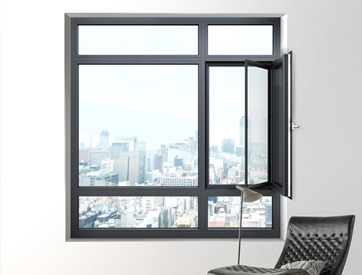
Low Price Aluminum Windows Wholesale in China: Double Glazed Windows, Aluminum Window Frame and Sliding Glass Doors Cost Data
Where a Low Price Aluminum Window Quote Actually Comes From
Ex-works price is a sum of eight cost lines. Three of them – aluminium profile, glass and hardware – account for 62 to 80 percent of the total. A supplier can only move the headline figure by changing one of those three, or by removing a cost that the buyer does not see on the drawing. Knowing the weight of each line is what makes a low number interpretable.
Eight cost lines and their share of ex-works price
| Cost line | Share of ex-works | Low spec content | Mid spec content |
|---|---|---|---|
| Aluminium profile | 32 – 38 % | 50 series, 1.4 mm wall, 3.10 kg/m | 70 series, 1.8 mm wall, 5.45 kg/m |
| Glazing (IGU) | 18 – 24 % | 5+9A+5 clear, Ug 2.8 | 6+12Ar+6 Low-E, Ug 1.3 |
| Hardware | 12 – 18 % | Local-grade, 10,000 cycles | EU C-class, 25,000 cycles |
| Thermal break strip | 5 – 8 % | PVC, 14.8 mm | PA66GF25, 24.0 mm |
| Surface treatment | 6 – 10 % | Powder 60 µm | PVDF 70 %, 2-coat |
| Gaskets and sealants | 3 – 5 % | EPDM 3rd-party recycled | EPDM virgin + silicone secondary |
| Labour and overhead | 8 – 12 % | Semi-auto line | CNC machining centre |
| Packaging | 2 – 3 % | Bubble + carton | Plywood crate + corner guard |
Aluminium ingot link: how a quote moves with the metal
Profile cost is indexed to the SMM A00 primary aluminium price. A 1500 x 1500 mm casement uses 11.6 to 20.4 kg of profile depending on series, so a USD 200 per tonne move in ingot shifts the window by USD 2.3 to 4.1. That is 3 to 6 percent of a USD 70 quote, which is why most factories hold a quotation valid for 15 to 30 days only. If a supplier offers a 90-day fixed price, ask whether ingot is hedged or whether the price is being carried by thinner wall.
Worked example: 1500 x 1500 mm casement, full bill of materials
| Item | Low spec | Amount (USD) | Mid spec | Amount (USD) |
|---|---|---|---|---|
| Profile | 17.4 kg x 2.85/kg | 49.6 | 24.6 kg x 2.85/kg | 70.1 |
| IGU 2.25 m² | Ug 2.8 clear, 21/m² | 47.3 | Ug 1.3 Low-E, 37/m² | 83.3 |
| Hardware set | Local, 10k cycle | 14.5 | EU C-class, 25k cycle | 38.0 |
| Thermal break | PVC 14.8 mm | 4.2 | PA66GF25 24 mm | 9.8 |
| Surface | Powder 60 µm | 13.5 | PVDF 2-coat | 31.5 |
| Gaskets / sealant | Recycled EPDM | 5.1 | Virgin EPDM + silicone | 8.4 |
| Labour / overhead | Semi-auto | 18.0 | CNC | 26.0 |
| Packaging | Carton | 4.8 | Ply crate | 11.2 |
| Subtotal | 157.0 | 278.3 | ||
| Per m² | 2.25 m² | 69.8 | 2.25 m² | 123.7 |
Aluminum Window Frame: Mass per Metre Sets the Floor Price
Among all cost lines, the profile is the one that scales linearly with metal and cannot be substituted without changing the drawing. Frame depth, wall thickness and polyamide width are the three numbers to read first on any cut sheet. The table below is measured on ROGENILAN extrusions, mass given as outer plus inner profile combined per linear metre of frame.
Series comparison: depth, wall, mass, Uf and price adder
| Series | Depth (mm) | Wall (mm) | Mass (kg/m) | PA66 (mm) | Uf (W/m²K) | Adder vs 50 |
|---|---|---|---|---|---|---|
| 50 non-thermal | 50 | 1.4 | 3.10 | – | 5.9 | base |
| 55 thermal | 55 | 1.4 | 3.85 | 14.8 | 3.6 | + 9 USD/m² |
| 65 thermal | 65 | 1.6 | 4.60 | 20.0 | 3.0 | + 16 USD/m² |
| 70 thermal | 70 | 1.8 | 5.45 | 24.0 | 2.6 | + 24 USD/m² |
| 80 thermal | 80 | 1.8 | 6.30 | 30.0 | 2.2 | + 33 USD/m² |
| 90 thermal | 90 | 2.0 | 7.85 | 34.0 | 1.9 | + 44 USD/m² |
| 100 thermal | 100 | 2.0 | 9.10 | 39.0 | 1.7 | + 58 USD/m² |
Reading it as a buyer: moving from a 50 series to a 70 series adds 2.35 kg/m of aluminium and USD 24 per m² of glazed area, and buys 3.3 W/m²K on the frame Uf. On a 40 m² house package that is USD 960 and roughly 0.35 W/m²K on the whole-window Uw – often the difference between passing and failing a 1.6 W/m²K code check in a temperate zone.
Alloy and temper: what the mill certificate must say
| Alloy / temper | Tensile (MPa) | Yield (MPa) | Elongation (%) | Typical use |
|---|---|---|---|---|
| 6063-T5 | 160 | 110 | 8 | Standard window and door profiles |
| 6063-T6 | 205 | 170 | 8 | High-rise, large sash |
| 6060-T66 | 215 | 160 | 8 | Thin-wall complex sections |
| 6061-T6 | 265 | 245 | 8 | Structural mullion, curtain wall |
| 6082-T6 | 310 | 255 | 8 | Heavy load, hurricane reinforcement |
A low quote on a large sash usually keeps 6063-T5 where 6063-T6 or 6061-T6 is required by span. The certificate is the check: EN 10204 3.1 mill cert, heat number traceable to the billet, tensile and yield tested per EN ISO 6892-1. Refuse “6063” without a temper suffix – T5 and T6 differ by 28 percent on tensile.
Surface treatment: cost adder against salt spray life
| Finish | Film (µm) | Adder (USD/m²) | Salt spray (h) | Standard |
|---|---|---|---|---|
| Mill finish | – | 0 | – | – |
| Anodising AA15 | 15 | 4.5 | 1,000 | QUALANOD |
| Powder coat Class 1 | 60 – 80 | 6.0 | 1,000 | Qualicoat / AAMA 2603 |
| Powder coat Class 2 | 60 – 80 | 8.5 | 2,000 | AAMA 2604 |
| PVDF 70 % 2-coat | 30 – 40 | 14.0 | 4,000 | AAMA 2605 |
| Wood grain sublimation | 60 + film | 18.0 | 1,000 | Qualicoat Class 1 base |
| PVDF 3-coat metallic | 40 – 50 | 20.0 | 4,000 | AAMA 2605 |
Double Glazed Windows: What the Glass Adds and Where It Gets Cut
Glass is the second largest cost line and the easiest one to downgrade invisibly, because the overall IGU thickness often stays 20 or 24 mm. The variables are coating, gas fill, spacer type and heat-soak treatment. Each one carries a measurable test result, so each one is verifiable.
IGU build-ups: Ug, SHGC, light transmission, mass and adder
| Build-up | Ug (W/m²K) | SHGC | LT | Mass (kg/m²) | Adder (USD/m²) |
|---|---|---|---|---|---|
| 5 + 9A + 5 clear | 2.8 | 0.72 | 0.80 | 20.0 | base |
| 5 + 12A + 5 clear | 2.7 | 0.72 | 0.80 | 20.5 | + 2 |
| 5 + 12A + 5 Low-E | 1.9 | 0.55 | 0.72 | 20.5 | + 7 |
| 5 + 16Ar + 5 Low-E | 1.5 | 0.55 | 0.72 | 20.8 | + 10 |
| 6 + 12Ar + 6 Low-E, warm edge | 1.3 | 0.52 | 0.70 | 25.2 | + 16 |
| 6 + 12Ar + 6 + 12Ar + 6 triple | 0.7 | 0.45 | 0.62 | 37.5 | + 42 |
Spacer, gas fill and sealant: the three silent downgrades
- Spacer: aluminium spacer conducts heat at the edge and raises the linear thermal bridge psi-value from 0.04 to 0.11 W/mK. Warm-edge stainless or composite spacer costs USD 3.5 per m² more and lifts the edge-of-glass temperature by 4 to 6 K, which is what prevents condensation at the frame rebate in a cold climate.
- Gas fill: 90 percent argon fill costs USD 2 per m² and drops Ug by 0.3 to 0.4. Without an EN 1279-3 gas content certificate, assume air. Measured fill rates on uncertified units in third-party testing run 55 to 70 percent, not 90.
- Secondary seal: polysulphide instead of silicone saves USD 1.2 per m² and reduces UV and moisture resistance. EN 1279-4 requires less than 5 percent desiccant moisture after accelerated ageing; low-spec units frequently fail at 8 to 12 percent, showing as internal fogging in year three to five.
Heat soak and safety glazing
Tempered glass carries a spontaneous breakage risk of roughly 1 in 400 panes from nickel sulphide inclusion. EN 14179-1 heat soak testing at 290 °C for 2 hours reduces that to about 1 in 8,000 and costs USD 3.8 per m². For overhead glazing, balustrades and any pane above 3 m in a trafficable area, heat soak is not an option – it is a code requirement in EN 12600 and AS 1288. A quote without it is incomplete, not cheap. See the glazing configuration data in aluminium windows and doors wholesale specs.
Sliding Glass Doors: Panel Count, Track and Hardware Cost Math
A sliding door price is driven by panel count and sash mass, not by opening area alone. A 3.0 m opening with two panels and the same opening with four panels differ by roughly 70 percent in hardware and profile content while covering the same hole in the wall.
Configuration to price conversion
| Config | Opening (W x H, m) | Panels | Sash mass (kg) | Roller rating | FOB (USD/m²) |
|---|---|---|---|---|---|
| 2-panel sliding | 1.8 x 2.1 | 2 | 58 – 72 | 80 kg | 105 – 150 |
| 3-panel sliding | 3.0 x 2.4 | 3 | 78 – 95 | 110 kg | 125 – 175 |
| 4-panel sliding | 3.6 x 2.4 | 4 | 92 – 118 | 140 kg | 140 – 200 |
| Lift-and-slide | 3.0 x 2.4 | 2 | 135 – 168 | 220 kg | 190 – 285 |
| 6-panel sliding | 6.0 x 2.7 | 6 | 150 – 195 | 250 kg | 215 – 320 |
Roller selection: the 60 percent reserve rule
Size the roller at no less than 1.6 times the sash mass. A 95 kg sash on a 110 kg roller leaves 16 percent reserve; on a 140 kg roller it leaves 47 percent. Bearing type matters more than rating: sealed stainless 6203 bearings run 25,000 cycles at 100 kg, while unsealed carbon steel versions drop to 8,000 cycles in a coastal atmosphere. Cycle test data per EN 13126-15 or AAMA 906 is the document to request.
Where a low sliding door quote is normally cut
- Single track instead of a drainage-channeled double track, saving USD 12 per linear metre and removing the second water barrier.
- Nylon rollers instead of sealed bearings, saving USD 18 per panel and cutting cycle life by 65 percent.
- Brush pile weatherstrip instead of EPDM bulb plus fin, saving USD 6 per metre and losing 2 to 3 dB of airborne sound reduction.
- Sash interlock without a thermal break, saving USD 9 per metre and adding a 0.2 W/m²K bridge through the meeting stile.
Full sliding system specifications, including track sections and Uw data by series, are in the sliding patio door export specification page and the aluminium sliding window frame data page.
Glass Garage Door: Sectional and Roll-Up Price Structure
Glass garage doors are quoted per square metre of door face but the cost sits in the section construction, the glazing infill and the spring package. A full-view door has almost no insulation value, which is the single biggest performance difference against an insulated sandwich panel with glass lites.
Door types, construction and FOB bands
| Type | Construction | U (W/m²K) | FOB (USD/m²) | Typical size |
|---|---|---|---|---|
| Full-view anodised | Alum frame + 6 mm tempered | 5.8 | 130 – 190 | 16 x 7 ft |
| Full-view polycarbonate | Alum frame + 8 mm twinwall | 3.4 | 95 – 140 | 16 x 7 ft |
| Insulated + glass lites | 40 mm PU + Low-E DG lite | 0.82 | 150 – 230 | 16 x 7 ft |
| Sandwich panel | 40 mm PU, steel skin | 0.50 | 42 – 95 | 16 x 7 ft |
| Roll-up RD77 | 77 mm aluminium slat | 1.9 | 42 – 78 | up to 5.0 m wide |
| Roll-up RD100 insulated | 100 mm PU-filled slat | 0.90 | 85 – 120 | up to 6.0 m wide |
Spring cycle rating and opener sizing
The torsion spring is the wear item. A 10,000-cycle spring is standard on low-spec doors, 25,000 on mid and 50,000 on commercial packages; the cost difference is USD 45 to USD 130 per door. At four cycles per day, 10,000 cycles is 6.8 years. Size the opener at 1.25 times the measured door mass: a 168 kg door needs a unit rated at 210 kg or the gearbox will run hot and trip thermal protection in summer. Refer to the insulated garage door specification data for the thermal figures behind the U-value column.
Landed example: 18 doors, 16 x 7 ft
| Line | Amount (USD) | Note |
|---|---|---|
| FOB, 18 doors x 3.72 m² x 165 | 11,048 | Insulated + glass lites |
| Sea freight 1 x 20GP Shenzhen – LA | 2,150 | Q4 2026 rate band |
| Insurance 0.35 % of CIF | 46 | All risks |
| US import duty 3.4 % (HTS 7610.10) | 450 | Non-dutiable for AU under ChAFTA |
| Port, THC, ISF, customs entry | 985 | Fixed per shipment |
| Drayage to site 90 km | 620 | Flatbed |
| Landed per door | 856 | FOB 613 + 243 to land |
FOB Price Bands and Volume Ladders by Product
The bands below are factory gate prices at Q4 2026, aluminium at USD 2,480 per tonne, for standard sizes and a single colour. They assume thermally broken frames and double glazing as the baseline – not non-thermal economy sections.
Product price matrix
| Product | Series | Uw (W/m²K) | FOB low (USD/m²) | FOB high (USD/m²) |
|---|---|---|---|---|
| Casement window | 50 – 70 | 4.5 – 2.4 | 62 | 140 |
| Sliding window | 70 – 90 | 4.2 – 2.6 | 68 | 125 |
| Double hung window | 60 – 70 | 4.0 – 2.8 | 95 | 165 |
| Awning window | 50 – 65 | 4.6 – 2.9 | 72 | 130 |
| Sliding glass door | 80 – 120 | 3.2 – 1.9 | 105 | 320 |
| Folding door | FD60 – FD110 | 3.4 – 1.6 | 98 | 420 |
| Glass garage door | RD77 – RD100 | 5.8 – 0.82 | 95 | 230 |
Volume discount ladder
| Order size (m²) | Discount | Effective casement FOB | Lead time (days) |
|---|---|---|---|
| Under 200 | base | 62 – 78 | 25 – 30 |
| 200 – 500 | – 6 % | 58 – 73 | 28 – 33 |
| 500 – 1,000 | – 10 % | 56 – 70 | 30 – 36 |
| 1,000 – 3,000 | – 14 % | 53 – 67 | 33 – 40 |
| Above 3,000 | – 18 to 21 % | 49 – 64 | 38 – 45 |
Incoterms: what is in and what is out
- FOB Shenzhen / Nansha includes ex-works, inland haulage to port, export customs clearance and loading on board. Excludes ocean freight, insurance, import duty and destination charges.
- EXW excludes export clearance. Only use it if you have a licensed China export agent – otherwise the goods cannot legally leave.
- CIF adds freight and minimum insurance (110 percent of invoice, Institute Cargo Clauses C). Cheaper policies exclude rust, breakage and water damage, which are the three claims that actually happen on glazed products.
- DAP / DDP adds destination haulage and, for DDP, duty and taxes. Useful for first orders; the landed premium is 6 to 11 percent over FOB plus your own forwarding.
Seven Places a Low Price Is Achieved and How to Detect Each One
None of the following are fraud. They are legitimate specification choices that reduce cost and reduce service life or performance at the same time. The point is to know which one you are buying. Each row gives the saving and the single test that exposes it.
| # | Cost cut | Saving | Consequence | Detection test |
|---|---|---|---|---|
| 1 | Wall 1.8 to 1.4 mm | USD 8 – 12/m² | Sash deflection, corner cracking | Vernier calliper on cut sample, EN 755-9 |
| 2 | PA66GF25 to PVC strip | USD 5 – 7/m² | Creep at 70 °C, Uf drift +0.4 | Burn test + DSC, ISO 11357 |
| 3 | Hardware 25k to 10k cycles | USD 20 – 38/unit | Handle and friction stay failure | EN 13126 cycle test report |
| 4 | Air fill instead of argon | USD 2/m² | Ug up by 0.3 – 0.4 | EN 1279-3 gas content cert |
| 5 | Aluminium spacer | USD 3.5/m² | Edge condensation, psi 0.11 | Inspect spacer at corner |
| 6 | Class 1 powder, no pre-treat | USD 4 – 6/m² | Chalking in 4 – 6 yr coastal | AAMA 2603 vs 2604 cert, 1,000 h salt spray |
| 7 | Non-heat-soak tempered | USD 3.8/m² | 1 in 400 spontaneous breakage | EN 14179-1 heat soak certificate |
Cost cuts that are acceptable
- Standard colours from the stock chart instead of a custom match: saves USD 4 per m² with zero performance loss.
- Consolidating sizes so a 40-unit order uses 3 module widths instead of 11: saves 5 to 9 percent on cutting waste and tooling.
- Sea freight consolidation – waiting 7 days to fill a 40HQ instead of shipping a 20GP: saves 18 to 26 percent per m² of freight.
- Carton packing instead of plywood crates for inland projects: saves USD 6.4 per m² where container handling is single-leg.
The evaluation scorecard in the China supplier verification article uses these seven items as a 100-point deduction model, which is worth running against any quote before the deposit is released.
Verifying a Low Quote Before the Deposit Is Released
A quote is a claim. The four documents below turn it into a specification. Request them in the RFQ, not after the deposit, because a supplier who cannot produce them at quotation stage will not produce them at shipment either.
Document checklist
- Cut sheet with section drawing: shows depth, wall thickness, polyamide width and gasket grooves to scale. Dimensioned, not a marketing render.
- Mill certificate EN 10204 3.1: alloy, temper, heat number, tensile and yield.
- Test report: EN 14351-1 with A*E*V* classification, or NFRC 100/200 with U-factor and SHGC, or AS 2047 with N rating. Must carry an accredited lab number.
- IGU certificate: EN 1279-2/-3 for gas content and moisture, plus coating data sheet from the glass manufacturer.
Acceptance limits to write into the contract
| Item | Test standard | Minimum acceptance |
|---|---|---|
| Air permeability | EN 1026 | Class 4 (600 Pa) |
| Water tightness | EN 1027 | 7A (300 Pa) or 9A for exposed sites |
| Wind resistance | EN 12211 | C4 / 1600 Pa, deflection L/200 |
| Uw whole window | EN ISO 10077-2 | As quoted, tolerance + 0.1 W/m²K |
| Acoustic Rw | EN ISO 717-1 | As quoted, tolerance – 1 dB |
| Coating adhesion | ISO 2409 | Class 0 cross-cut |
| Salt spray | ISO 9227 | 1,000 h, creep under 1 mm |
Factory audit points that matter
- Extrusion source: in-house press or bought-in profile. In-house means billet traceability; bought-in means a mill cert per batch, which is often missing.
- Machining: CNC centre vs hand-operated saw. Corner crimping or screw assembly – crimped corners with two-component adhesive hold 2.4 times the shear of screw-only.
- IGU line: butyl extruder with temperature control and a press, not manual assembly. Manual lines produce 8 to 15 percent gas loss at the seal.
- QC gate: 100 percent dimensional check and water spray test station, or sample-only inspection.
- Packing: corner protection, vertical racking, desiccant in container, and a load plan photograph before the doors close.
Landed Cost: From FOB to Installed, Worked Example
The comparison below is 52 townhouses in a temperate coastal zone, 34.6 m² of window and door area per unit, 1,795 m² total. Three specification levels are costed through to installed cost per m², including the energy consequence over ten years.
Capital cost stack, three specification levels
| Line | Low spec | Mid spec | High spec |
|---|---|---|---|
| Series / Uw | 55 TB / 4.2 | 70 TB / 2.4 | 90 TB / 1.7 |
| FOB (USD/m²) | 62 | 95 | 138 |
| FOB total (USD) | 111,290 | 170,525 | 247,710 |
| Freight + insurance | 18,400 | 19,850 | 22,600 |
| Duty + destination | 21,540 | 33,010 | 47,940 |
| Installation labour | 68,210 | 71,650 | 76,900 |
| Landed per m² | 122.1 | 164.2 | 219.8 |
| 10-yr HVAC delta | + 41,800 | baseline | – 18,300 |
| Call-back rate, 24 mo | 4.9 % | 1.4 % | 0.8 % |
On capital cost alone the low package saves USD 75,600. Over ten years the HVAC penalty and the call-back provision remove USD 62,400 of that, leaving a real saving of USD 13,200 – about 2 percent of the package – in exchange for 4.9 percent of units requiring rework in the first two years. That is the arithmetic to run before accepting the lowest number.
Container loading and freight efficiency
| Package | m² per 40HQ | Units per 40HQ | Freight per m² (USD) | Damage rate |
|---|---|---|---|---|
| Carton, stacked | 1,050 – 1,180 | 310 – 350 | 9.8 – 11.4 | 0.8 – 1.6 % |
| Plywood crate | 760 – 880 | 220 – 260 | 13.6 – 16.2 | 0.1 – 0.3 % |
| Vertical rack, glass only | 1,320 – 1,460 | – | 7.9 – 9.2 | 0.3 – 0.7 % |
Crating costs 38 percent more freight per m² but reduces in-transit breakage from about 1.2 percent to 0.2 percent. At a USD 95 per m² FOB value, 1 percent breakage equals USD 0.95 per m², against a USD 4.2 per m² freight premium – so on high-value glazing, crating loses. On a USD 62 per m² low-spec package the arithmetic is close to break-even, which is why crating is usually dropped there.
Low, Mid and High Specification: Ten-Line Comparison
Side-by-side specification comparison
| Parameter | Low | Mid | High |
|---|---|---|---|
| Frame depth | 50 – 55 mm | 70 mm | 90 – 100 mm |
| Wall thickness | 1.4 mm | 1.8 mm | 2.0 mm |
| Frame mass | 3.10 – 3.85 kg/m | 5.45 kg/m | 7.85 – 9.10 kg/m |
| Thermal break | PVC 14.8 mm | PA66GF25 24 mm | PA66GF25 34 – 39 mm |
| Frame Uf | 3.6 – 5.9 | 2.6 | 1.7 – 1.9 |
| IGU | 5+9A+5 clear | 6+12Ar+6 Low-E | Triple Low-E, warm edge |
| Whole window Uw | 4.2 – 4.5 | 2.4 – 2.8 | 1.6 – 1.8 |
| Hardware cycles | 10,000 | 25,000 | 50,000 |
| Coating life (coastal) | 4 – 6 yr | 10 – 12 yr | 15 – 20 yr |
| Service life | 12 – 15 yr | 25 – 30 yr | 35 – 40 yr |
When low specification is the correct choice
Low spec is right for: rental stock with a 7-year hold, temporary or site accommodation, internal partitions with no weather exposure, projects in a tropical zone where the envelope is not the thermal control layer, and markets where the resale premium for a 1.8 W/m²K window is below USD 22 per m². It is the wrong choice for: owner-occupied stock in a heating-dominated climate, anything within 800 m of the coast, buildings over three storeys where wind load governs, and any project where the developer carries a defects liability period longer than 24 months.
Material alternatives at the same price point
| Material | Uw achievable | FOB (USD/m²) | Service life | Note |
|---|---|---|---|---|
| uPVC | 1.3 – 2.0 | 55 – 110 | 20 – 25 yr | Cheapest per U-value, limited span |
| Aluminium thermal break | 1.6 – 4.5 | 62 – 320 | 25 – 40 yr | Span and slimmest sightline |
| Timber-aluminium clad | 1.2 – 1.8 | 210 – 480 | 30 – 50 yr | Highest cost, interior finish |
| Steel thermally broken | 1.4 – 2.2 | 280 – 620 | 40 – 60 yr | Heritage and slim profile |
RFQ Checklist: What to Send to Get a Comparable Quote
A vague RFQ produces a low number that cannot be compared with anything. Send the items below and quotes from different factories become directly comparable, because every supplier is pricing the same specification.
Technical items
- Opening schedule with width, height, quantity and operation type per opening.
- Design wind pressure in Pa or kPa, with the code reference and return period.
- Target Uw and SHGC, or the applicable energy code clause.
- Acoustic target Rw or STC, and the noise spectrum if it is road or rail.
- Coastal distance and any salt exposure class.
- Colour reference – RAL, powder chart code or anodising grade.
- Glass requirement: safety class, heat soak, obscure, laminated, Low-E position.
- Hardware brand preference or cycle class, plus any security or child-safety requirement.
Commercial items
- Incoterm and named port.
- Quantity in m² and in units, and whether it is a single or staged delivery.
- Target delivery date and whether partial shipment is acceptable.
- Payment structure: 30/70 deposit-before-shipment, or LC at sight, or OA terms.
- Certification required for import – CE, NFRC, AS 2047, Miami-Dade NOA.
- Packing specification and whether plywood crates are mandatory.
- Warranty period and claim procedure.
- Third-party inspection requirement and who pays for it.
Related specification pages
- House windows: double hung, basement and villa window specs with FOB pricing
- Windows and doors wholesale: accessories, soundproof specs and pricing
- Foshan doors and windows suppliers: specification and pricing comparison
- Garage doors for homes: insulated and glass garage door specs
- Casement windows factory: aluminium casement specs and pricing
- How to choose sliding doors