Home > Casement Windows > Door Window Accessories Supplier in China: Casement Windows with Screens, Roller Shutter Torque and Garage Door Opener Duty Class
Door Window Accessories Supplier in China: Casement Windows with Screens, Roller Shutter Torque and Garage Door Opener Duty Class
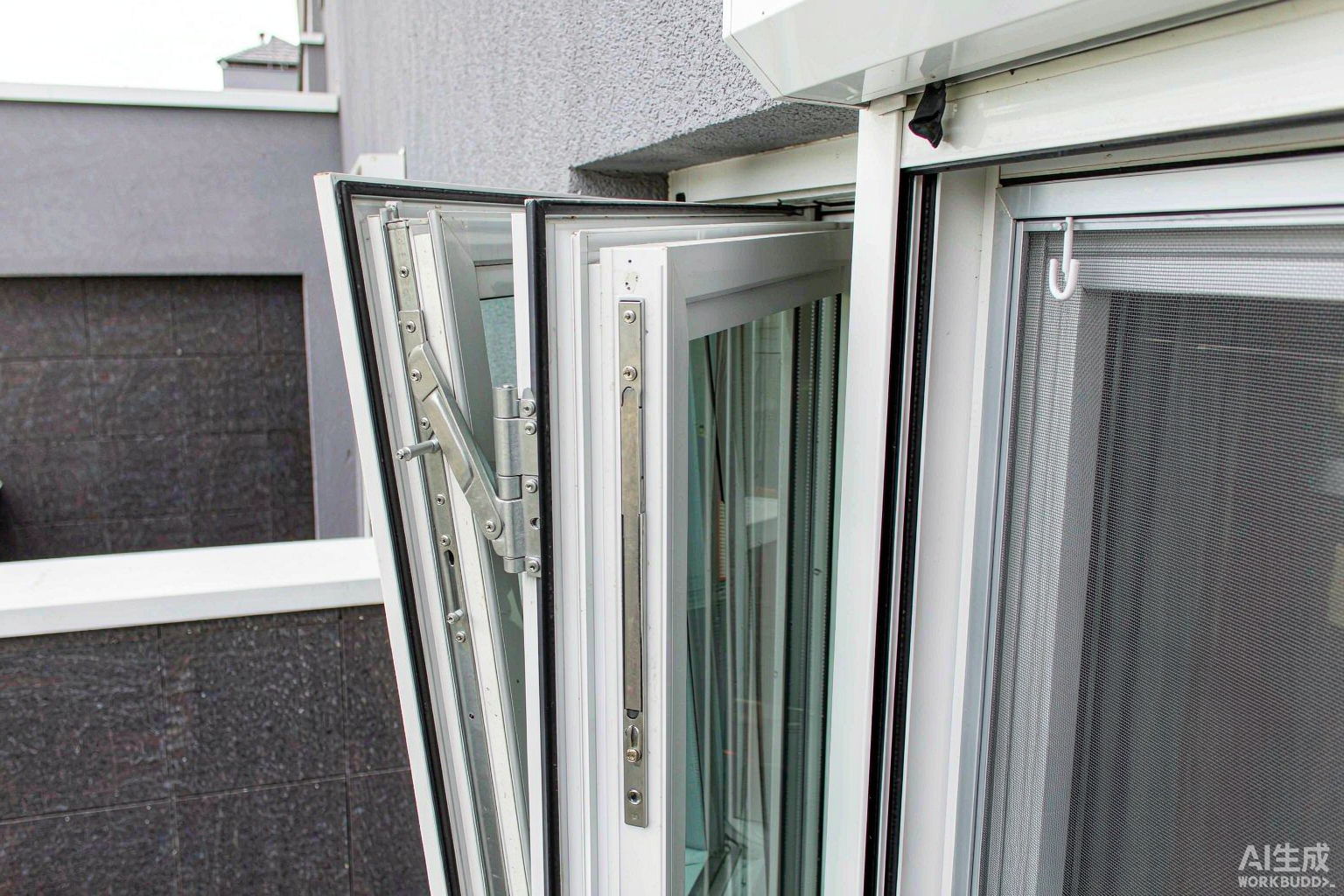
ROGENILAN door window accessories: multi-point casement hardware, insect screen and integrated roller shutter headbox on an aluminium window in China.
This article prices and specifies the door window accessories package that ships with an aluminium window and door order: operating hardware, screening, roller shutters, operators and the sealing consumables that keep the opening dry. Every table is built from the governing standard number and every price is FOB Foshan at three volume tiers, so the accessory line can be specified instead of assumed.
Door Window & Accessories: What Actually Ships in One Order
A door window accessories line on a quotation is where most project budgets leak. The frame, the glass and the sash are priced per square metre and easy to compare. The accessories are priced per opening, they are specified by standard number rather than by dimension, and a single line such as “handle, standard” can cover a USD 9 fitting or a USD 34 one with a 25-year corrosion declaration. This article breaks the accessory group into four families, gives the standard number that governs each one, and puts FOB numbers against every item so the line can be specified instead of assumed.
Accessories are also the part of the order that fails first on site. A handle that chatters after 8,000 cycles, a screen mesh that sags in a 42 °C Gulf summer, or an opener that was sized for a 118 kg steel door and is asked to lift a 576 kg glazed one — these are specification errors, not manufacturing defects, and they are all decided at the purchase-order stage.
Water tracks into the reveal, gasket takes a permanent set
Per-opening hardware kit: what is in the box
A kit is built per opening type, not per square metre. The table below is the count used for a standard aluminium system; a lift-and-slide door or a tilt-and-turn window will differ in the number of locking points, not in the family list.
Silicone, backing rod and primer — site consumables, but worth shipping in the container because they are 3–5 × cheaper bought at origin.
Fixing anchors to the structure — always site-supplied, because the substrate is not known at the factory. What the factory does supply is the anchor schedule (type, embedment, spacing) with the shop drawings.
Spare parts — a separate line, 2–3 % of hardware value, see the procurement section below.
Screens and shutters — separate sub-assemblies with their own lead time, usually 5–8 days longer than the frame.
Hardware Grades and the Standards That Define Them
“Included” is not a grade. Every piece of operating hardware in the EU market is declared against an EN 13126 part, and the declaration carries three numbers that a buyer can check: durability in cycles, corrosion in salt-spray hours, and the mass it is rated to carry. Ask for those three numbers on the quotation and the price difference between two suppliers usually becomes explainable.
EN 13126 parts referenced on a window or door declaration
Part
Covers
What the test report gives the buyer
Typical spec on a project order
EN 13126-1
Requirements common to all hardware
Durability grade, corrosion grade, mass grade
Referenced as the umbrella; never quoted alone
EN 13126-3
Handles and handle gear
Torque resistance, cycle count before free play > 3°
Grade 3 / 20,000 cycles minimum for rental and multi-family
EN 13126-4
Espagnolette bolts and strikers
Locking-point engagement, static load at the keep
Number of locking points must match sash height
EN 13126-6
Variable-geometry stays (friction stays)
Stay opening angle, sash mass, cycle count
Mass grade is the one that matters — see the table below
EN 13126-8
Tilt-and-turn / turn-only hardware
Durability class 1/2/3 = 5,000 / 10,000 / 20,000 cycles
Class 3 for any door, Class 2 acceptable for a bedroom window
EN 13126-15
Rollers and carriages for sliding
Roller load rating, wear over 25,000 passes
Load rating per roller × number of rollers ≥ 1.3 × sash weight
EN 13126-16
Lift-and-slide hardware
Lift force, carriage load, corrosion
Lift force < 120 N at the handle for a 200 kg panel
The EN 13126 series has more than twenty published parts and the part numbers shift as the series is revised. Do not accept a report that says “tested to EN 13126” with no part number — the part number is what tells you whether the sample was a handle or a friction stay.
EN 1935 hinge mass grades — the number that actually sizes a sash
A friction stay is selected by sash mass, not by sash size. A 600 × 1200 mm casement with 6 mm glass is roughly 26 kg; the same frame with a 24 mm double-glazed unit is 38 kg; with a laminated acoustic unit it reaches 46 kg. The grade boundaries fall right inside that spread.
EN 1935 grade
Rated sash mass (kg)
Test cycles
Where it is used
Consequence of under-rating
11
80
200,000
Heavy entrance and pivot-adjacent doors
—
12
100
200,000
Aluminium entrance doors, 1000 × 2100
Sash drops 2–4 mm in 18 months
13
120
200,000
Oversize single doors, glazed entrance
Handle lift needed to engage the lock
14
160
200,000
Large-format pivot leaves, RC-rated doors
Hinge blade deformation, irreversible
Window stay, 30 kg class
30
10,000–20,000
Standard casement vent
Sash rubs the frame at the bottom corner
Window stay, 50 kg class
50
10,000–20,000
Large casement, triple glazing
Stay arm bends; sash will not close in wind
Window stay, 80 kg class
80
20,000
Oversize fixed-and-open combinations
—
Cycle count is the second selection axis and it is the one that gets missed. A lobby door in a 48-unit block is opened roughly 100,000 times a year. A 200,000-cycle hinge is a two-year component in that location regardless of how well it carries the mass. The specification should state both: mass grade and cycle class.
EN 1670 corrosion grades — salt spray hours
Grade
Neutral salt spray (h)
Intended environment
Upcharge vs. grade 2
Coastal project?
0
No defined resistance
Interior only
—
No
1
24
Dry interior, conditioned
Baseline
No
2
48
Standard inland residential
+ USD 0
No
3
96
Humid inland, pool enclosures
+ USD 1.2–2.0 / opening
Marginal
4
240
Coastal < 1 km, industrial
+ USD 3.5–6.0 / opening
Yes
5
480
Marine, C5-M, desalination-adjacent
+ USD 7–12 / opening
Yes, recommended
ISO 9227 salt-spray hours rank batches against each other; they do not predict service life. A 480-hour result does not mean 20 years. What it does mean is that a grade 5 fitting survives the same chloride load roughly ten times longer than a grade 1 fitting, and for a project 800 m from a shoreline that is the only comparison you need.
EN 12209 lock case classification fields
Field
Grades
What to write on the PO
Why it matters here
Category of use
1 (light) / 2 (medium) / 3 (heavy)
Grade 3 for entrance doors
Grade 1 hardware on a public entrance fails inside a year
Durability
Grade by cycle count
50,000 cycles minimum, 100,000 for shared entrances
The lock is the first item to develop free play
Door mass
Declared by the test house
Match to the actual leaf mass
A heavy glazed leaf shears the latch in the keep
Fire resistance
Suitable / not suitable
Suitable only if the door assembly is fire-rated
Adding EI₂30 moves the whole door to AVCP System 1
Corrosion
Grade by EN 1670 hours
Same grade as the hinge
Mixed grades on one door defeat the purpose
Security
Grade 1–7 (EN 12209 Annex)
Match to the EN 1627 RC target
RC2 is not achievable with a grade 1 lock case
Casement Windows with Screens: Mesh, Free Area and Frame Conflict
The keyword casement windows with screens hides a geometry problem that only surfaces on site. An out-swinging casement sash and an insect screen cannot occupy the same plane. One of the two has to move to the room side, and whichever it is, it changes the handle reach, the reveal depth and the cleaning access. Deciding this before extrusion costs nothing; deciding it after the container ships costs a replacement screen order plus a second freight leg.
Mesh selection is the second half of the problem and it is quantifiable: open area determines both airflow and light, and it is a pure function of wire diameter and mesh count, not of brand.
Mesh specification and computed open area
For a woven square mesh with wire diameter d and pitch p = 25.4 / count, open area is OA = (1 − d/pwarp) × (1 − d/pweft). The table is computed from that formula, which means any supplier quoting an open-area figure can be checked with a vernier gauge and a magnifier.
Mesh type
Count
Wire ø (mm)
Open area (%)
Light trans. (%)
Δp at 1 m/s (Pa)
Best for
Fibreglass standard
18×16
0.28
66.0
62.1
3.8
Standard inland residential, cheapest per m²
Fibreglass 20×20
20×20
0.23
67.1
63.0
3.7
Finer insect exclusion, same airflow as 18×16
Aluminium 18×16
18×16
0.20
75.0
70.5
3.0
Hot climates, better airflow, dent-prone
Aluminium 14×14
14×14
0.20
79.2
74.4
2.7
Maximum airflow, large insects only
Stainless 304 14×14
14×14
0.18
81.1
76.3
2.5
Coastal, bushfire-adjacent, long life
Stainless 316 12×12
12×12
0.25
77.8
73.1
2.8
Marine C5-M, will not rust-stain the reveal
Polyester pet screen
11×10
0.35
73.2
68.8
3.1
Pets, high tear resistance
Solar insect 20×20
20×20
0.30
58.3
54.8
4.9
West and south elevations, solar control
Pleated / plisse
pleat
pleat
55.0
51.7
5.5
Wide sliding openings, retracts sideways
How much screen area is needed for a real air-change rate
A 14 m² bedroom at 2.7 m ceiling is 37.8 m³. At a face velocity of 0.5 m/s — fast enough to ventilate, slow enough that paper does not lift off a desk — the geometric opening needed is A = Q / (3600 × v × OA).
Target rate
Airflow required
Mesh open area
Geometric screen area needed
2 ACH
76 m³/h
66%
0.06 m²
2 ACH
76 m³/h
79%
0.05 m²
4 ACH
151 m³/h
66%
0.13 m²
4 ACH
151 m³/h
79%
0.11 m²
6 ACH
227 m³/h
66%
0.19 m²
6 ACH
227 m³/h
79%
0.16 m²
8 ACH
302 m³/h
66%
0.25 m²
8 ACH
302 m³/h
79%
0.21 m²
A single 600 × 1200 mm casement vent is 0.72 m² of geometric area. With a 66 % mesh that delivers 0.48 m² of free area, which is enough for about 4 ACH in that room. Specifying a 58 % solar mesh on the same vent drops it to 3.4 ACH. That is the whole trade-off in one line: solar mesh buys shading and pays for it in ventilation.
Screen frame types and where each one fits
Type
Cassette / frame depth
Retracts to
Suits
FOB upcharge vs. fixed panel
Notes
Fixed panel
20–25 mm
—
In-swing casement, fixed lights
Baseline
Cheapest; blocks cleaning access to the outer glass face
Hinged casement screen
25–30 mm
Swings inward
Out-swing casement
+ 18–26 USD/pc
Needs 30–40 mm clear reveal; competes with the curtain
Roll-up (vertical)
35–50 mm headbox
Full height
Windows, narrow doors
+ 32–48 USD/pc
Spring tension drifts; specify a re-tensionable axle
Side-retract (pleated)
35–45 mm side profile
Sideways pleat stack
Sliding doors up to 4 m
+ 40–62 USD/pc
Lowest threshold obstruction — the only option for a level-access door
Sliding panel
25–32 mm
Side track
Existing sliding door retrofit
+ 22–34 USD/pc
Shares a track with the door; adds 55–70 mm to the overall depth
Order the screen at the same time as the window, not after. Screen profiles are extruded from the same die family as the frame; a screen-only re-order 12 months later carries a new die-set charge of USD 600–1,400 and a 25-day Extrusion lead time, which is more than the screens themselves cost.
Standards that apply to insect screening
ASTM D3656 / D3656M — the US specification for insect screening and louver cloth. Covers mesh count, wire diameter, burst strength and, for aluminium, the corrosion-resistant coating.
ISO 9044 — industrial woven wire cloth, used to verify the declared mesh count and aperture on metal mesh.
No harmonised European standard exists for insect screens. In the EU a screen is not a construction product with a DoP; it is an accessory. The practical consequence is that the mesh and frame are declared under the window’s own EN 14351-1 file at most, and the buyer must write the mesh, the count and the wire diameter into the order.
Fire: a screen fitted in an escape route or a corridor should carry an EN 13501-1 reaction-to-fire class. Polyester pleated mesh defaults to class E or F; glass-fibre and stainless are non-combustible.
Roller Shutter: Slat, Roll Geometry, Motor Torque and ΔR
A roller shutter is the accessory with the most engineering behind it and the least of it visible in a quotation. Three numbers decide whether it works: the roll diameter it reaches when fully wound, the torque that diameter demands from the motor, and the additional thermal resistance the closed curtain contributes. All three can be calculated before ordering.
Roll diameter and required motor torque
A curtain of drop H and slat build-up t, wound on a tube of diameter d₀, reaches D = √(d₀² + 4Ht/π). The torque the motor must deliver is the curtain weight acting at the roll radius, T = M × g × r, with a 15 % allowance for guide and bearing friction. The table is computed for a 60 mm octagonal tube.
Curtain drop
Area (W = 2.4 m)
Curtain mass
Roll diameter
Turns
Required torque
1.5 m
3.6 m²
17.3 kg
147 mm
36
14.4 N·m
2.0 m
4.8 m²
23.0 kg
167 mm
48
21.7 N·m
2.5 m
6.0 m²
28.8 kg
184 mm
60
29.9 N·m
3.0 m
7.2 m²
34.6 kg
200 mm
71
38.9 N·m
4.0 m
9.6 m²
46.1 kg
228 mm
95
59.3 N·m
The important shape in that table is not the torque value, it is the fact that roll diameter grows with the square root of drop while curtain mass grows linearly. Doubling the drop from 1.5 m to 4.0 m multiplies the mass by 2.67 but the torque by 4.1. Motor selection that “worked on the last job” therefore fails on taller openings, which is the single most common shutters warranty claim.
Motor sizing table derived from the same model
Solving the torque equation for the largest curtain a given motor can lift at 2.4 m width gives the selection band below. Sizes above 50 N·m move to a 70 mm width gives the selection band below. Sizes above 50 N·m move to a 70 mm tube and a different bracket set, which is why 50 N·m is the practical ceiling for a residential order.
Motor rating
Max curtain mass
Max curtain area
Max drop @ 2.4 m wide
10 N·m
13.4 kg
2.78 m²
1.16 m
15 N·m
17.8 kg
3.71 m²
1.55 m
20 N·m
21.8 kg
4.54 m²
1.89 m
30 N·m
28.9 kg
6.02 m²
2.51 m
40 N·m
35.2 kg
7.33 m²
3.06 m
50 N·m
41.0 kg
8.55 m²
3.56 m
60 N·m
46.5 kg
9.68 m²
4.03 m
Slat pitch, ΔR and the thermal gain
The closed curtain adds a thermal resistance ΔR, measured under EN 13125 (hot-box method for shutters). The combined value is Ueff = 1 / (1/Uw + ΔR). The result is a percentage saving, which means the better the window already is, the less a shutter buys in absolute terms.
Window Uw (W/m²K)
37 mm ΔR 0.09
39 mm ΔR 0.11
42 mm ΔR 0.13
45 mm ΔR 0.15
52 mm ΔR 0.21
Saving with 45 mm
2.60
2.107
2.022
1.943
1.871
1.682
28.1%
2.00
1.695
1.639
1.587
1.538
1.408
23.1%
1.60
1.399
1.361
1.325
1.290
1.198
19.4%
1.30
1.164
1.137
1.112
1.088
1.021
16.3%
1.00
0.917
0.901
0.885
0.870
0.826
13.0%
0.80
0.746
0.735
0.725
0.714
0.685
10.7%
Read the last column carefully: the same 45 mm shutter delivers a 28.1 % U-value reduction on a 2.60 single-glazed aluminium window and a 10.7 % reduction on a 0.80 triple-glazed one. A shutter is an upgrade for a mediocre window; on a high-performance window its value is shading, security and storm protection, not insulation. Do not sell it as an insulation measure into a passive-house project.
EN 13659 declaration fields for a shutter
Field
Classes
Reading
Wind load resistance
0 to 6 (50 / 100 / 150 / 200 / 300 / 400+ Pa)
Class 3 minimum for a 2-storey suburban site; class 5–6 for coastal or high-rise
Garage Door Opener: Force, Duty Class and Entrapment Compliance
The garage door opener is the accessory most often sized by habit. The torsion springs counterbalance roughly 93 % of the door mass; the opener handles the residual imbalance plus the rolling and track friction. That residual scales with the door mass, so a glass door changes the entire opener selection even though the opening is dimensionally identical.
Required pull force by door construction
Frequired = (m g (1 − η) + μ m g) × SF, with spring balance η = 0.93, friction coefficient μ = 0.10 and a safety factor of 1.5.
Door construction (16 x 7 ft unless noted)
Mass
Weight
Residual after springs
Friction
Required pull
Opener to specify
Steel sandwich 16×7
118 kg
1158 N
81 N
116 N
295 N
≥ 400 N
Steel sandwich 16×8
135 kg
1324 N
93 N
132 N
338 N
≥ 400 N
Aluminium + 6 mm single glass
224 kg
2197 N
154 N
220 N
560 N
≥ 600 N
Aluminium + IGU 24 mm
380 kg
3728 N
261 N
373 N
951 N
≥ 1000 N
Aluminium + laminated IGU
576 kg
5651 N
396 N
565 N
1441 N
≥ 1500 N
Impact-rated glass 16×7
608 kg
5964 N
418 N
596 N
1521 N
≥ 1500 N
Wood composite 16×7
155 kg
1521 N
106 N
152 N
388 N
≥ 400 N
The two glazed rows are where projects go wrong. A 16×7 opening with 6 mm single glass needs a 600 N operator instead of a 400 N one; with a laminated IGU it needs 1,500 N, which is a jackshaft operator with a different mounting arrangement entirely. The opener is quoted before the glass is chosen about half the time, and the correction is a re-order, not an adjustment. See glass garage door mass data.
Duty class and expected service life
Duty class
Rated cycles
Typical application
Cycles/day
Years to rating
Standard residential
50,000
2 cars, 6-8 cycles/day
6
22.8
Standard residential
50,000
2 cars, 6-8 cycles/day
12
11.4
Standard residential
50,000
2 cars, 6-8 cycles/day
40
3.4
Heavy residential
100,000
3-car / workshop, 12-16 cycles/day
6
45.7
Heavy residential
100,000
3-car / workshop, 12-16 cycles/day
12
22.8
Heavy residential
100,000
3-car / workshop, 12-16 cycles/day
40
6.8
Commercial
500,000
Depot, 100+ cycles/day
6
228.3
Commercial
500,000
Depot, 100+ cycles/day
12
114.2
Commercial
500,000
Depot, 100+ cycles/day
40
34.2
Read that as a procurement number, not a marketing number. A “standard residential” operator rated at 50,000 cycles is a 22.8-year component at 6 cycles/day and a 3.4-year component at 40 cycles/day. A shared workshop bay, a small depot or a multi-car household with a teenager will destroy a residential operator well inside the warranty period, and the failure is not covered.
Entrapment and safety: UL 325 versus EN 12453
Requirement
UL 325 (US)
EN 12453 (EU)
What to check on the unit
Reversal on obstruction
Within 2 s of contact
Reverse or stop; residual force limit
Photocell must be present and monitored, not optional
Sustained force limit
—
400 N
Measured at 50 / 300 / 500 / 1200 / 1800 mm above floor
Peak dynamic force
—
1,400 N
Short-duration spike at the leading edge
Residual force after reversal
—
150 N
The number most often missing from a datasheet
Monitored external sensor
Required, Class II–IV
Required for automatic operation
A sensor that fails “closed” is not compliant
Manual release
Required
Required
Must be reachable at 1.8 m without tools
Battery backup
State-law dependent (CA, FL) — verify against the destination
Not mandated
Cheap option, USD 22–38; worth it for hurricane egress
Accessory kit that ships with the operator
Two 433 MHz or 868 MHz rolling-code transmitters as standard; a third is USD 4.50.
Wireless keypad: + USD 14–22. Worth specifying on any rental or multi-driver property.
Wall console with a vacation/lock-out switch: included on most units above 800 N.
Battery backup: + USD 22–38, mandatory in several US states and the cheapest insurance against a door that will not open during a storm.
Soft-start / soft-stop: standard on belt drives. On a glazed door this is not a comfort feature — a hard stop makes the glass rattle in the rebate and shortens the silicone life.
Other Exterior Accessories: Sills, Flashing, Weep Covers and Anchors
Beyond the four families above there is a group of other exterior accessories that is quoted per linear metre or per opening and is almost never itemised on a window or door quotation. They are cheap, they are aluminium or stainless, and they are the parts that determine whether the opening stays dry. A missing sill end cap is a USD 0.60 part that lets water into a wall cavity.
Per-linear-metre and per-opening items
Item
Unit
Typical section
Material
FOB USD
What happens if it is dropped
Head flashing / drip cap
m
60 x 40 x 1.5 mm
6063-T5 mill / coated
3.80 – 6.20
Rain tracks down the render and into the head reveal
Sill (window board), 100 mm
m
100 x 30 x 1.5 mm
6063-T5 with end caps
7.40 – 11.50
Water sits on the masonry and wicks under the frame
Sill end cap (pair)
set
Injection moulded
Nylon 66 / ABS
0.55 – 1.10
Sill fills with wind-driven rain and overflows inward
Reveal / sub-sill trim
m
40 x 25 mm angle
6063-T5
2.60 – 4.30
Gap between frame and opening is sealed with foam only
Weep-hole cover
pc
25 x 12 mm
Nylon 66, UV stabilised
0.18 – 0.42
Insects nest in the drainage chamber; wasps in the frame
Anchor strap / lug
pc
1.5 mm, 120 mm
304 stainless
0.42 – 0.85
Frame relies on foam adhesion alone
Frame screw, 4.2 x 32
pc
Torx T20
A2-70 stainless
0.09 – 0.16
Rust streaks below the fixings within 18 months
Backing rod, 20 mm
m
Closed-cell PE
Polyethylene
0.22 – 0.38
Sealant bonds to the back of the joint (three-sided bond)
Architrave / casing
m
60 x 12 mm
6063-T5 coated
4.10 – 7.80
Perimeter gap is covered with caulk that cracks in year two
Where the money actually goes on a 60-opening house
Take a 60-opening detached house: 42 casement windows, 6 sliding doors, 12 exterior doors. The accessory lines below are taken from the per-opening kit table in section 1 and the per-metre table above, at the 200-unit price tier.
Line
Qty
Unit (200 tier)
Extension
Casement hardware kits x 42
42
USD 13.20
USD 554
Sliding door hardware kits x 6
6.0
USD 37.80
USD 227
Exterior door hardware kits x 12
12
USD 49.50
USD 594
Insect screens x 42 @ 0.72 m²
30
USD 14.80
USD 447
Sills + end caps x 42 @ 1.1 m
46
USD 9.40
USD 434
Head flashing x 60 @ 1.2 m
72
USD 4.90
USD 353
Gasket + brush pile, 640 m
640
USD 1.25
USD 800
Silicone + backing rod, 60 openings
60
USD 3.40
USD 204
Anchors, screws, weep covers, caps
60
USD 4.60
USD 276
Total accessory content
USD 3,889
That total is USD 3,889 on a house whose frame-and-glass package is typically USD 18,000–26,000. Accessories are therefore 4–6% of the order value but close to 100% of the call-back risk. Cutting the accessory line to save USD 900 is the single worst trade available in this product group.
Sealing and Glazing Consumables: Gasket Compound, Setting Blocks and Silicone
Seals are specified by compound, not by profile. Almost every water-ingress claim on an aluminium opening is a seal problem, and almost every seal problem is a compound problem that was decided at the quotation stage. The table below is the compound short list, with the two numbers that matter: compression set (permanent deformation after long-term compression) and thermal conductivity.
Gasket compound selection
Compound
Shore A
Compression set %
λ W/m·K
UV / ozone
Where it belongs
EPDM cellular
60
25
0.35
Good
Openable sash & frame rebate
EPDM solid
65
20
0.42
Very good
Openable sash & frame rebate
TPE (thermoplastic)
70
30
0.38
Fair
Cost-down exterior, short service life
Silicone sponge
55
15
0.30
Excellent
High-temperature / coastal
Brush pile (PP)
0
0
0.05
n/a – sliding only
Sliding track, non-weathering
PVC (legacy)
75
45
0.50
Poor – hardens
Budget interior only
PVC gasket is still offered because it is 30–40% cheaper per metre. It has a compression set of 45%, which means that after two summers the section has taken a permanent flat and no longer pushes back against the sash. The opening then passes a hose test in month one and fails in month 26. EPDM solid at 20% is the default for any openable sash; EPDM cellular at 25% is used where closing force has to stay low on a large tilt-and-turn sash.
Setting blocks, wedges and the glazing gap
Setting block: EPDM or neoprene, 80–100 mm long, 3–6 mm thick, placed at the quarter points of the glass edge. Its job is to stop the glass bearing on aluminium, which would put a hard point load on the edge and break it in the first thermal cycle.
Side blocks: 3 mm clearance each side of the unit. Too tight and the unit cannot expand; too loose and the unit walks in the rebate and the sightline goes uneven.
Glazing wedge: extruded EPDM or PVC, driven into the rebate to centre the unit. This is the part that is missing from most “glazing kit” lines, and its absence is what makes a sealed unit rattle.
Backing rod: closed-cell polyethylene, 20–30% larger than the joint, so it compresses and controls sealant depth. Without it the sealant bonds to the back of the joint and tears on the first movement.
Neutral-cure silicone only. Acetoxy (acid) silicone releases acetic acid during cure and attacks both an anodised layer and a polyamide thermal break. On a thermal-break frame this is a hidden failure: the profile corrodes inside the assembly where nobody looks.
Sealant joint geometry: width-to-depth ratio of 2:1 with a minimum width of 6 mm and a minimum depth of 6 mm. A 4 mm hairline bead looks neater on handover day and fails two winters later.
Accessory Pricing: FOB Foshan by Item and Volume Tier
The prices below are FOB Shenzhen / Foshan, quoted against three volume tiers measured in openings (not square metres): 50, 200 and 500. Accessory pricing is driven by the number of openings, because hardware is packed per opening. This is also why a project with many small windows has a higher accessory cost per square metre than one with few large panes.
FOB price list by item
Item
Unit
50 openings
200 openings
500 openings
Standard hardware kit, casement window
set
USD 15.00
USD 13.20
USD 11.80
Premium hardware kit, casement window
set
USD 26.00
USD 23.40
USD 21.00
Hardware kit, sliding door
set
USD 42.00
USD 37.80
USD 34.00
Hardware kit, exterior door
set
USD 55.00
USD 49.50
USD 44.50
Fixed insect screen, fibreglass 18×16
m2
USD 16.50
USD 14.80
USD 13.20
Retractable screen cassette
set
USD 48.00
USD 43.00
USD 38.50
Pleated screen, 2-panel
set
USD 62.00
USD 56.00
USD 50.00
Roller shutter, 39 mm slat, manual
m2
USD 46.00
USD 41.50
USD 37.00
Roller shutter, 42 mm slat, tubular motor
m2
USD 78.00
USD 70.00
USD 63.00
Roller shutter, 52 mm slat, motorised
m2
USD 104.00
USD 93.50
USD 84.00
Tubular motor 20 Nm
pc
USD 42.00
USD 37.50
USD 33.50
Tubular motor 40 Nm
pc
USD 58.00
USD 52.00
USD 46.50
Garage door opener, 800 N belt
pc
USD 118.00
USD 106.00
USD 95.00
Garage door opener, 1200 N chain
pc
USD 142.00
USD 128.00
USD 115.00
EPDM gasket
m
USD 1.40
USD 1.25
USD 1.10
Neutral silicone 300 ml
pc
USD 2.60
USD 2.30
USD 2.10
Spare-part allowance (of hardware value)
%
3.0%
2.5%
2.0%
Hardware grade: what the three price bands buy
The four kit grades below are the same opening type (casement window, sliding door, exterior door) with different hardware content. The differences that matter are corrosion resistance (EN 1670 grade), cycle rating (EN 13126) and whether the locking set has been tested to EN 1627.
Kit grade
Casement window
Sliding door
Exterior door
Corrosion / cycle declaration
Economy (local brand)
USD 9.50
USD 26.00
USD 34.00
None supplied
Standard (EN 13126 mid grade)
USD 15.00
USD 42.00
USD 55.00
EN 1670 grade 3, 10,000 cycles
Premium (EU brand, EN 1670 gr.4)
USD 26.00
USD 78.00
USD 96.00
EN 1670 grade 4, 25,000 cycles
Premium + RC2 locking set
USD 34.00
USD 96.00
USD 128.00
EN 1670 grade 4 + EN 1627 RC2 set
The spread from economy to premium is USD 16.50 on a casement window and USD 94 on an exterior door. On a 60-opening house that is roughly USD 1,750–2,400, or about 8–10% of the whole accessory line. Against a 25-year service expectation the premium kit is the cheaper of the two, and it is the difference between a handle that is still tight in year 15 and one that has to be replaced in year 7.
Volume tiers and where the breaks actually are
50 openings: list price. Tooling and set-up are amortised over a short run, and hardware is bought from the distributor rather than the hardware maker.
200 openings: −10 to −12%. Hardware is bought direct, cartons are packed per opening rather than per item, and the export carton is sized to the container.
500 openings: −19 to −22%. At this point the accessory line is usually consolidated into the frame carton and shipped with the frames, which removes a separate pick-and-pack operation.
Below 50 openings the accessory line is usually priced at list plus a small-order surcharge of 8–15%, because the purchase is below the hardware maker’s own minimum.
Accessories are quoted FOB per opening. If a supplier quotes them per square metre, ask for the per-opening breakdown — a per-m² accessory price hides the fact that a 400 mm bathroom vent window and a 2.4 m sliding door carry very different hardware content.
Spare-Part Allowance: Ordering Against the Actual Failure Distribution
A spare-part allowance is normally expressed as a percentage of hardware value and is usually argued about. The table below uses a five-year service-call distribution from export orders: pct is the share of hardware units replaced in the first five years, unit is the FOB unit price and lead is the replacement lead time in weeks if the part is not held locally.
Replacement distribution and lead time
Part
Replaced in 5 yr %
FOB unit USD
Lead time (weeks)
Hold in country?
Friction stay / hinge
0.9%
USD 18.00
26
Yes — long lead time
Handle / espagnolette
1.1%
USD 14.00
9
Optional
Lock cylinder + escutcheon
0.6%
USD 22.00
14
Optional
Gasket / brush pile (m)
2.5%
USD 1.40
6
Yes — cheap and fast-moving
Glazing wedge + setting block
4.0%
USD 0.35
3
Yes — cheap and fast-moving
Roller / carriage
0.5%
USD 6.50
21
Yes — long lead time
Weep cover / end cap
3.0%
USD 0.50
4
Yes — cheap and fast-moving
Two items dominate: gasket and brush pile at 2.5% and glazing wedges at 4.0%. They are also the two cheapest items on the list, which is the whole point — the allowance should be spent on the parts that are replaced often and cost little, not spread evenly across the bill of materials.
Building the allowance from the distribution
A 2% allowance applied evenly to hardware value buys the wrong mix: it over-stocks handles and cylinders, and under-stocks gasket, wedges and weep covers.
A distribution-weighted allowance on the 60-opening house above is roughly USD 180–260, i.e. 3% of the USD 3,889 accessory line, and it covers the parts that actually get called out.
Friction stay and roller/carriage have 26 and 21-week lead times when ordered from origin. Two of each per 50 openings held in the destination country removes the worst service exposure for about USD 120.
Cylinders should be keyed to a construction master key and re-pinned on handover. Ordering 12 differently keyed cylinders for a 12-door house is a common and entirely avoidable error.
Write the spare allowance into the purchase order as a line with quantities, not as a percentage. A percentage line is interpreted by the packing department as “whatever is left over”.
Procurement Terms for the Accessory Line
Accessories have their own commercial terms, separate from the frame package, because they are bought in from hardware makers rather than extruded. The differences show up in MOQ, lead time and payment.
Commercial terms
Term
Accessory line
Frame + glass package
Note
MOQ
50 openings per item
1 x 40HQ (about 180–220 m²)
Accessories normally ride in the same container as the frames
Lead time
25–35 days from approved hardware schedule
30–40 days from approved drawings
The hardware schedule is a separate approval; missing it is the most common cause of late shipment
Payment
30% deposit, 70% before shipment
Same
T/T; L/C at sight accepted above USD 60,000
Warranty
10 years on hardware function, 25 years on coating
10–15 years
Corrosion warranty requires the EN 1670 grade to be stated on the order
Samples
One full kit per opening type, charged at list, credited on order
Corner sample, free
Sample hardware is the only way to check handle feel and closing force before committing
Certification documents
EN 13126 test report + EN 1670 corrosion declaration
EN 14351-1 DoP + AEV report
Ask for the report number, not the certificate cover
The four approvals that gate the order
Hardware schedule. Every opening listed with item, grade, finish and quantity. This is the document that turns a quotation into a packable order.
Finish confirmation. Anodised AA15 / AA20 / AA25 or powder to Qualicoat Class 1 / Class 2, with the RAL or anodising colour confirmed on a physical chip.
Cylinder keying plan. Construction master / differ / keyed-alike. Changing this after production starts is a re-order, not a change order.
Opening direction and handing. A left-hand and a right-hand casement use different stays and keeps. Ten incorrectly handed openings is a 30-day problem, not a 3-day one.
Most late accessory shipments are caused by the hardware schedule being approved after the frame drawings. Sequence it the other way round: approve hardware first, then build the frame schedule around the confirmed items.
Packing, Container Maths and Freight per Opening
Accessories are dense or bulky depending on the family, and the two behave completely differently in a container. Hardware kits and screens are volume-limited; roller shutter boxes and tubular motors are payload-limited. The table below resolves both limits for a 40 ft high-cube (67 m³ usable, 25,000 kg payload) and gives the freight absorbed by one unit.
Which limit binds, and what one unit costs to ship
Item
Volume m³
Mass kg
Qty by volume
Qty by payload
Binding limit
Freight / unit USD
Hardware kit, casement window
0.0075
2.6
7,978
9,134
volume
USD 0.43
Hardware kit, sliding door
0.0210
7.4
2,849
3,209
volume
USD 1.19
Hardware kit, exterior door
0.0240
9.1
2,493
2,609
volume
USD 1.36
Fixed screen panel
0.0110
2.1
5,440
11,309
volume
USD 0.62
Retractable cassette
0.0300
4.8
1,994
4,947
volume
USD 1.71
Roller shutter cased, 2.4 x 2.5 m
0.0880
46.0
680
516
payload
USD 6.59
Tubular motor
0.0060
3.2
9,973
7,421
payload
USD 0.46
Garage door opener
0.0320
12.5
1,870
1,900
volume
USD 1.82
Read the roller shutter line carefully. A cased shutter for a 2.4 x 2.5 m opening is 0.088 m³ and 46 kg, so a 40HQ is full by weight at 516 units while there is still room for 680 by volume. Adding shutter boxes to an order therefore eats payload, not space, and it will displace frames. On a mixed order this is the single most common reason a container that “should have fitted” does not.
Freight as a share of FOB value
Hardware kit, casement window: freight USD 0.43 against FOB USD 13.20 — 3.3%. Freight is not a factor.
Retractable screen cassette: USD 1.71 against USD 43.00 — 4.0%. Still small, but the cassette is 0.030 m³ and only 1,994 fit a container.
Tubular motor: USD 0.46 against USD 37.50 — 1.2%, and payload-limited at 7,421 units.
Roller shutter, cased: USD 6.59 against about USD 70.00/m² x 6 m² = USD 420 — 1.6%, but it consumes 46 kg of a 25,000 kg payload for one opening.
The conclusion is the opposite of the usual one: for accessories, freight is rarely the deciding cost. Duty is. Hardware is classified separately from frames in most tariff schedules, and the rate can differ by 10–20 percentage points.
Consolidating accessories into the frame container
Ship accessories in the same container as the frames whenever possible. A separate LCL shipment of 0.8 m³ of hardware costs USD 140–260 in handling fees alone, which is more than the freight on the whole accessory line inside a full container.
Pack per opening, not per item. A carton containing one casement kit for opening C-14 saves the site team from sorting 42 handle bags, and it removes the most common cause of “we are short three striker plates”.
Label in the destination language for the cylinder and handing. A left-hand stay in a bag marked only in Chinese will be found on the last day of the programme.
Ship 2% extra gasket and wedges loose in the container, not in the kits. They are the two items that get damaged and lost on site.
Landed Cost: Duty Sensitivity on the Accessory Line
Because accessories have their own HS heading in most destinations, the duty rate applied to them is usually not the rate applied to the aluminium frame. The table below holds freight, insurance and handling constant and varies only the duty rate, indexed to 100 USD of FOB accessory value.
Duty sensitivity
Duty rate
Landed index (FOB = 100)
Increase over FOB
Typical destination profile
0.0%
100.0
+0.0%
Duty-free or preferential origin
4.0%
104.0
+4.0%
Standard MFN, low
6.5%
106.5
+6.5%
Standard MFN, low
15.0%
115.0
+15.0%
Standard MFN, mid
25.0%
125.0
+25.0%
Section 301 / elevated tariff
31.2%
131.2
+31.2%
Section 232 aluminium derivative
On the 60-opening house the accessory line is about USD 1,900 FOB. Moving that line from a 0% to a 25% duty profile adds roughly USD 475 — more than the entire difference between an economy and a premium hardware grade. Confirm the HS heading for hardware, locks and motors in writing before the order, separately from the heading used for the frames.
What is inside the landed index
Component
Basis
Share of FOB
Comment
FOB value
Ex-works + inland to port + export clearance
100.0%
The index base
Ocean freight
40HQ, allocated per unit by volume or weight
1.2 – 6.6%
See the packing table above
Marine insurance
0.30% of CIF, all-risk
0.3%
Flat and non-negotiable
Import duty
Destination tariff on the hardware heading
0 – 31.2%
The variable that dominates
Customs clearance + port charges
Per entry, amortised
0.8 – 2.4%
Fixed cost, hurts small orders
Inland delivery + unpack
To site, per pallet
1.5 – 3.0%
Higher for island and remote sites
The shape of that table is why small accessory orders are poor value: clearance and inland delivery are fixed, so on a USD 900 order they can add 6–8% on top of duty. Consolidating two or three projects into one shipment is worth more than negotiating the unit price.
Installation Sequence and Commissioning for Accessories
Accessories are fitted in a fixed order, and the order exists because each step closes off access to the previous one. Fitting the handle before the sash is hung, or the screen before the frame is sealed, produces work that has to be undone.
Sequence
Frame anchoring. Anchor lugs or straps at 150 mm from each corner and at 450–600 mm centres. Stainless only. Check frame diagonals before the final anchor is set.
Perimeter seal. Backing rod, then neutral-cure silicone at 2:1 width-to-depth. Head flashing goes on before the sealant skins over.
Sill and end caps. Sill set with a 5 mm fall to the front; end caps bonded, not just pushed on. This step leaks first if it is rushed.
Glazing. Setting blocks at quarter points, side blocks, wedge the unit centrally, then gasket. Do not wedge against the setting block.
Hardware. Stays and hinges first, then the espagnolette drive, then keeps and strikers. The order matters because the keeps are positioned against the locking points.
Adjustment. Set the friction stay so the sash holds at any angle up to 90° and the closing force is below 40 N at the handle.
Screens and shutters. Screen cassettes and shutter headboxes go on last, after the frame has been made weathertight.
Commissioning. Cycle every opening five times, hose-test to AAMA 501.2 or equivalent, then fit weep covers and end caps.
Commissioning parameters worth writing down
Parameter
Target
How to check
Typical fault
Closing force at handle
≤ 40 N
Spring balance on the handle
Gasket too hard or sash out of square
Sash hold at any angle
No drift at 30° / 60° / 90°
Open and release
Friction stay grade too light for the sash mass
Lock point engagement
5–7 mm mushroom overlap
Inspect the keep with the sash closed
Keep positioned against the wrong cam
Screen mesh tension
No sag over 600 mm span
Straightedge across the frame
Mesh not tensioned or spline undersized
Shutter travel
Full drop, no stall in last 300 mm
Three full cycles
Motor torque undersized or barrel bearing dry
Opener reversal
Reverses within 2 s on a 50 mm block
UL 325 / EN 12453 test block
Force setting too high, or photocell not monitored
Weep flow
Water exits at the sill within 30 s
Hose test at 2 L/min for 5 min
Weep chamber blocked by mortar or the cover fitted too early
Failure Modes: Where Accessory Orders Go Wrong
The failures below are specification failures, not manufacturing defects. Every one of them is decided at the purchase-order stage and every one of them is visible in the commissioning table above if it is checked.
Six failure modes and their root cause
Symptom
Root cause
Where it was decided
Fix cost vs. prevention cost
Handle chatters or drops after 3–5 years
Friction stay rated below sash mass
Hardware schedule
USD 34 part + 2 h labour vs. USD 12 upgrade
Water tracks into the reveal
No backing rod, three-sided sealant bond
Scope of supply
Re-seal the opening, USD 90–160 vs. USD 4.20 of rod
Screen mesh sags in the first summer
PET or PVC mesh on a large span, no tensioning
Mesh specification
Re-mesh, USD 28–45 vs. USD 6 for 20×20 fibreglass with tensioning spline
Shutter stalls in the last 300 mm
Motor sized from the previous job, not from drop and width
Motor selection
Replace motor, USD 75–140 vs. USD 16 for the next size up
Opener burns out inside the warranty period
Duty class not matched to cycles per day
Opener selection
USD 150–260 and a truck roll vs. USD 24 for the heavy-residential class
Black streaks below fixings
Zinc-plated screws instead of A2 stainless
Fastener specification
Cannot be fixed cosmetically; USD 0.11 per screw at order stage
Three that are only visible in year two
Acetoxy silicone on a thermal-break frame. The acid attacks the polyamide strip inside the profile. The frame looks fine for 18–24 months, then the break loses stiffness and the sash drops. The only fix is a new sash.
PVC gasket compression set. 45% set means the section is permanently flat after two summers. It passes the handover hose test and fails the second winter.
Galvanic contact at the sill. An aluminium sill bedded directly on wet concrete (pH 12–13) or against CCA-treated timber dissolves from the contact face outward. Bituminous paint or a DPC membrane at the interface costs USD 0.90 per metre.
Project Records
Two records with the accessory line itemised separately from the frame package.
Premium, EN 1670 grade 4, AA25 anodised (coastal, 1.8 km from shore)
Mesh
Stainless 316 12×12 on all openable windows (sand and salt load)
Shutter
42 mm slat, tubular motor 40 N·m, group-controlled on the west elevation
Accessory FOB
USD 9,140 (5.1% of the USD 179,000 package)
Freight allocation
USD 612 (6.7% of accessory FOB; shutters consumed 41% of payload)
Duty applied
5.0% GCC common external tariff on the hardware heading
Landed accessory cost
USD 9,905
Local equivalent quoted
USD 16,380 (European hardware brands, 14-week lead time)
Saving
USD 6,475, −39.5%
Service calls, 24 months
4 (2 shutter limit-switch resets, 1 cylinder re-pin, 1 screen re-mesh after a sandstorm)
Structural or coating failures
0
The shutter payload was the notable number: 46 cased shutters at 46 kg took 2,116 kg of the container payload, which forced 18 frames into the second container. On the repeat order the shutters were shipped KD with the curtain rolled inside the headbox and the guide rails separate, which cut shutter volume by 44% and let the whole order ship in one box.
Record B — 24-unit apartment refurbishment, Porto, Portugal
Item
Value
Scope
96 casement windows with retractable screens, 24 exterior doors, no shutters
Hardware grade
Standard, EN 1670 grade 3; RC2 locking set on ground-floor units
Mesh
Fibreglass 20×20 (no salt load; 20×20 chosen for the smaller midge count)
Gasket
EPDM solid, 20% compression set, with 2% loose allowance in the container
Accessory FOB
USD 6,280
Freight allocation
USD 214 (3.4%; volume-limited, no shutters)
Duty applied
4.7% EU MFN on the hardware heading
Landed accessory cost
USD 6,775
Local equivalent quoted
USD 10,940
Saving
USD 4,165, −38.1%
Service calls, 18 months
2 (1 handle replaced under warranty, 1 screen cassette re-tensioned)
Screens re-meshed
0 — the 20×20 fibreglass with tensioning spline held over 600 mm spans
Both records show the same shape: the accessory line is 5–6% of package value, freight on it is 3–7%, and duty is the largest single adder. A 40% saving against local supply is available without touching the hardware grade — it comes from buying the same European-standard hardware at origin.
Accessory Grade Comparison and Selection Rules
Selection is a function of destination environment and cycles per day. The matrix below maps both to a hardware grade, a finish and a mesh, and is the fastest way to settle a specification argument before the order is placed.
Destination-driven selection matrix
Destination profile
Finish
Hardware grade
Mesh
Gasket
Notes
Inland, low pollution, temperate
Polyester powder, Qualicoat Class 1
Standard, EN 1670 gr.3
Fibreglass 18×16
EPDM solid
The default for most of Europe inland
Coastal < 5 km
AA25 anodised or Class 2 powder
Premium, EN 1670 gr.4
Stainless 316 12×12
EPDM solid
A4 (316) fasteners mandatory; A2 will tea-stain
Coastal < 1 km or marine
AA25 anodised + Class 2 topcoat
Premium, EN 1670 gr.4
Stainless 316 12×12
Silicone sponge
Add a rinse-down maintenance clause
Desert / high dust and sand
AA20 anodised
Standard gr.3
Stainless 304 14×14
EPDM cellular
Cassette screens fail in sand; use fixed panels
Tropical, high humidity
Class 2 powder
Premium gr.4
Stainless 304 14×14
Silicone sponge
Mould risk on PVC mesh; use 304 or 316
High-traffic commercial
AA25 anodised
Premium + RC2 set, EN 13126 gr.4
Stainless 304 14×14
EPDM solid
Specify 100,000+ cycles, not 25,000
Where to spend and where not to
Upgrade
Cost adder
Return
Verdict
Economy to standard hardware
+ USD 5.50 / window
Corrosion declaration and cycle rating
Always
Standard to premium hardware
+ USD 11.00 / window
EN 1670 gr.4, 25,000 cycles
Coastal, commercial, or > 20-year hold
RC2 locking set
+ USD 8.00 / window, + USD 32 / door
EN 1627 RC2 on the locking perimeter
Ground floor, rental, insurance-driven
Stainless 316 instead of fibreglass mesh
+ USD 9.40 / m²
Survives salt and sand
Coastal and desert only
AA25 instead of Class 1 powder
+ USD 3.20 / m² of frame
Roughly doubles coating life at the coast
Coastal < 5 km
Next motor size up
+ USD 16 / shutter
Removes the most common warranty claim
Always, on drops above 2.5 m
Heavy-residential opener class
+ USD 24 / opener
6.8 years instead of 3.4 at 12 cycles/day
Any shared or 3-car bay
Soft-start / soft-stop
+ USD 18–30
Protects glazed doors from rattle
Glazed or insulated garage doors
The two upgrades with the best ratio are the next motor size and the heavy-residential opener class: USD 16 and USD 24 respectively, against warranty claims that start at USD 150 and a truck roll. The upgrade with the worst ratio is RC2 on an upper-floor window that is not reachable from a balcony.
When not to buy the accessory package from origin
When the destination has a local hardware brand whose parts the site team already stocks. Mixing a European stay with a locally bought handle is a common and expensive error — pick one system.
When the order is below 50 openings and the hardware is standard: the small-order surcharge plus clearance can erase the FOB advantage.
When the cylinder needs a restricted key section that is under patent in the destination country. Order the cylinder locally and ship the door without it.
When the project is on a live programme with less than 30 days of float. Accessory lead time is 25–35 days from an approved hardware schedule, and that schedule is often the last document to be signed.
RFQ Checklist for a Door Window & Accessories Order
Send these 16 items with the enquiry. An enquiry that includes items 1–6 can be priced the same day; one that does not will come back as a request for more information, which usually costs a week.
Technical items
Opening schedule with sizes, type and handing for every opening.
Sash or leaf mass per opening (hardware is sized by mass, not by area).
Design wind pressure in kPa or psf for the site, and the exposure category.
Destination environment: distance from the coast, pollution or industrial classification, altitude.
Required corrosion grade (EN 1670 grade 3 or 4) and coating standard (Qualicoat class, AA number).
Cycles per day for every opener and for every door closer.
Security requirement: none, RC1N, RC2, RC2N or RC3, and which openings.
Mesh type and the insect pressure it has to stop (midge, mosquito, sand fly, sand).
Commercial items
Quantity per item and the total number of openings, for tier pricing.
Incoterm: FOB Shenzhen / Foshan, CIF, or DAP.
Destination port and the HS heading you intend to declare for hardware, locks and motors.
Spare-part allowance, expressed as quantities per part rather than a percentage.
Cylinder keying plan, or a decision to ship without cylinders.
Packing requirement: per opening, per building, or per floor.
Warranty period required in writing, and whether a corrosion declaration is needed for the destination building code.
Required documents: EN 13126 test report, EN 1670 declaration, EN 1627 certificate with the exact configuration tested.
Item 11 in the commercial list is the one that changes the landed number most. The hardware heading is frequently not the same as the frame heading, and confirming it before the order avoids a duty bill that is 10–20 percentage points higher than the quotation assumed.
Glossary and Standards Index
Terms
Term
Meaning in this context
Espagnolette
Multi-point drive: a rod or flat bar in the sash edge that moves several locking points from one handle
Friction stay
Four-bar hinge that holds an open casement sash at any angle by friction; rated by sash mass and opening angle
Keep / striker
The frame-mounted receiver a locking point engages; its position sets lock-point overlap
Setting block
Small EPDM or neoprene block at the quarter points of a glass edge that carries the glass weight
Backing rod
Closed-cell PE rod that controls sealant depth and prevents three-sided bonding
Compression set
Permanent deformation of a gasket after long-term compression; the number that predicts seal life
Free area
The open (not blocked by wire) fraction of a screen mesh, expressed as a percentage
ΔR
Additional thermal resistance added by a closed roller shutter, measured to EN 13125
Duty class
Cycle rating of an operator or closer: the number of open-close cycles it is tested for
Three-sided bond
Sealant bonded to both faces and the back of a joint; it tears on the first movement
A2 / A4 fastener
A2 = 304 stainless, A4 = 316 stainless with molybdenum for chloride resistance
AA15 / AA20 / AA25
Qualanod anodising thickness classes: 15, 20 and 25 µm
Standards referenced
Standard
Covers
What to ask for
EN 13126 series
Hardware for windows and doors: duty, mass, corrosion
Test report with the mass and cycle rating
EN 1670
Corrosion resistance of hardware, grades 0–5
Grade declaration, grade 3 minimum exterior
EN 12209
Lock cases and striking plates for doors
Grade by usage and cycle count
EN 1303
Cylinders for locks
Key-related security grade and durability grade
EN 1627 / EN 1630
Burglar resistance, RC1N–RC6
Certificate naming the exact configuration tested
EN 1935
Single-axis hinges
Grade 11–14 by mass, plus cycle rating
EN 12365 series
Gasket and weatherstrip profiles
Compound and compression set data
EN 13659
Roller shutters: performance including safety
DoP with wind resistance class
EN 13125
Thermal resistance added by shutters (ΔR)
Hot-box test result for the actual slat
EN 12453
Safety in use of powered doors: force limits
Force measurements at the five test heights
UL 325
Door, drapery, gate and window operator safety (US)